


- XPENG unveiled its Turing Physical AI Architecture (VLA 3.0), and outlined its vision that the next breakthrough in Physical AI will come from advancing intelligence and physical capabilities together.
- XPENG's Advanced General-Purpose Humanoid Robot IRON makes its first public debut. IRON is scheduled to begin training as a store assistant in XPENG retail stores in Q1 2027, with its official public release targeted for Q2 2027.
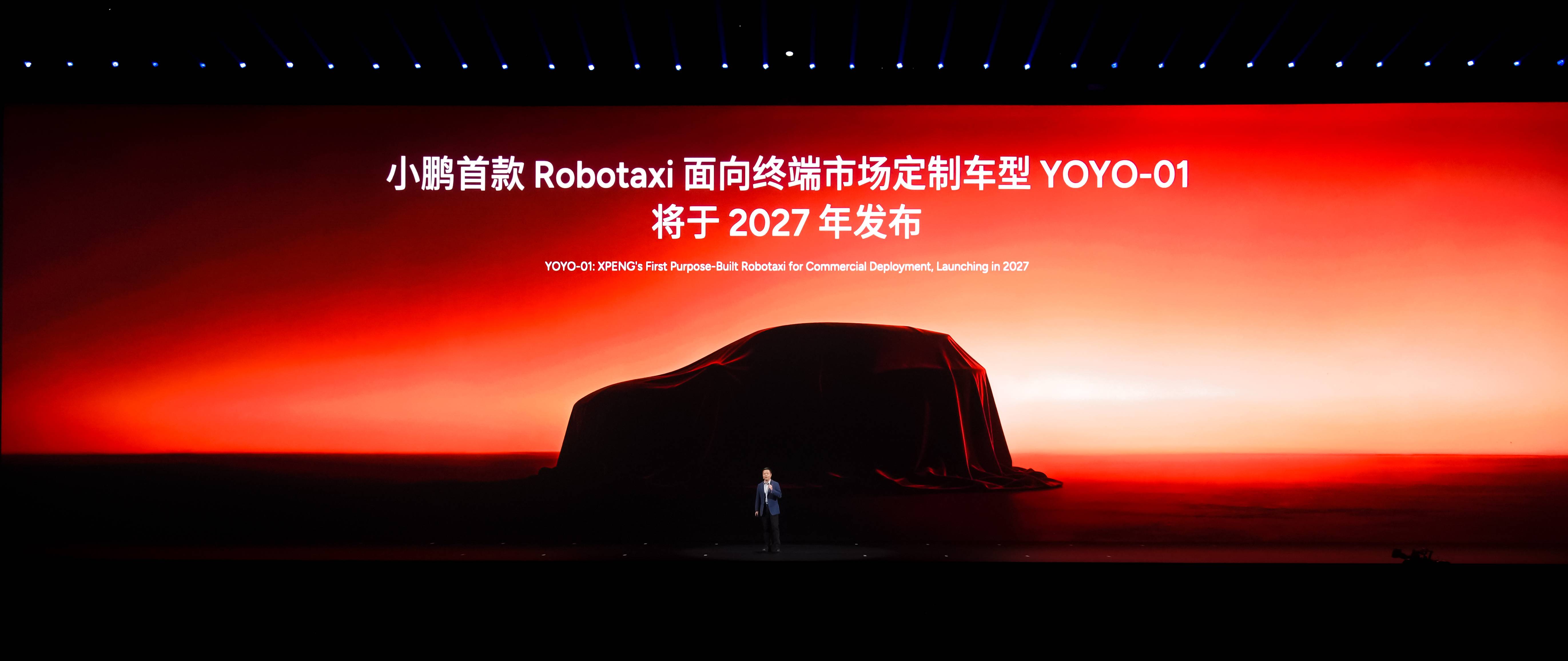
- XPENG's first purpose-built Robotaxi model for commercial deployment, YOYO-01, is scheduled for release in 2027.
GUANGZHOU, China, November 25, 2026 – XPENG Inc. (“XPENG” or the “Company,” NYSE: XPEV; HKEX: 9868), a leading global Physical AI company, today unveiled its Turing Physical AI Architecture(VLA 3.0)at the eighth XPENG AI Day, introducing an integrated framework connecting AI cognition, real-time decision-making and physical execution across intelligent vehicles and humanoid robots.
Under the theme “ORIGIN,” XPENG set out its view that the next breakthrough in Physical AI will come from developing intelligence and physical capabilities together. Rather than focusing on individual AI models or hardware components, XPENG is building the full technology stack — from proprietary chips and AI models to perception, software, control systems and physical hardware — to enable AI to operate in the real world.
The architecture provides a shared technology foundation for XPENG's intelligent vehicles and humanoid robots, while supporting its expansion into autonomous mobility and flying vehicles.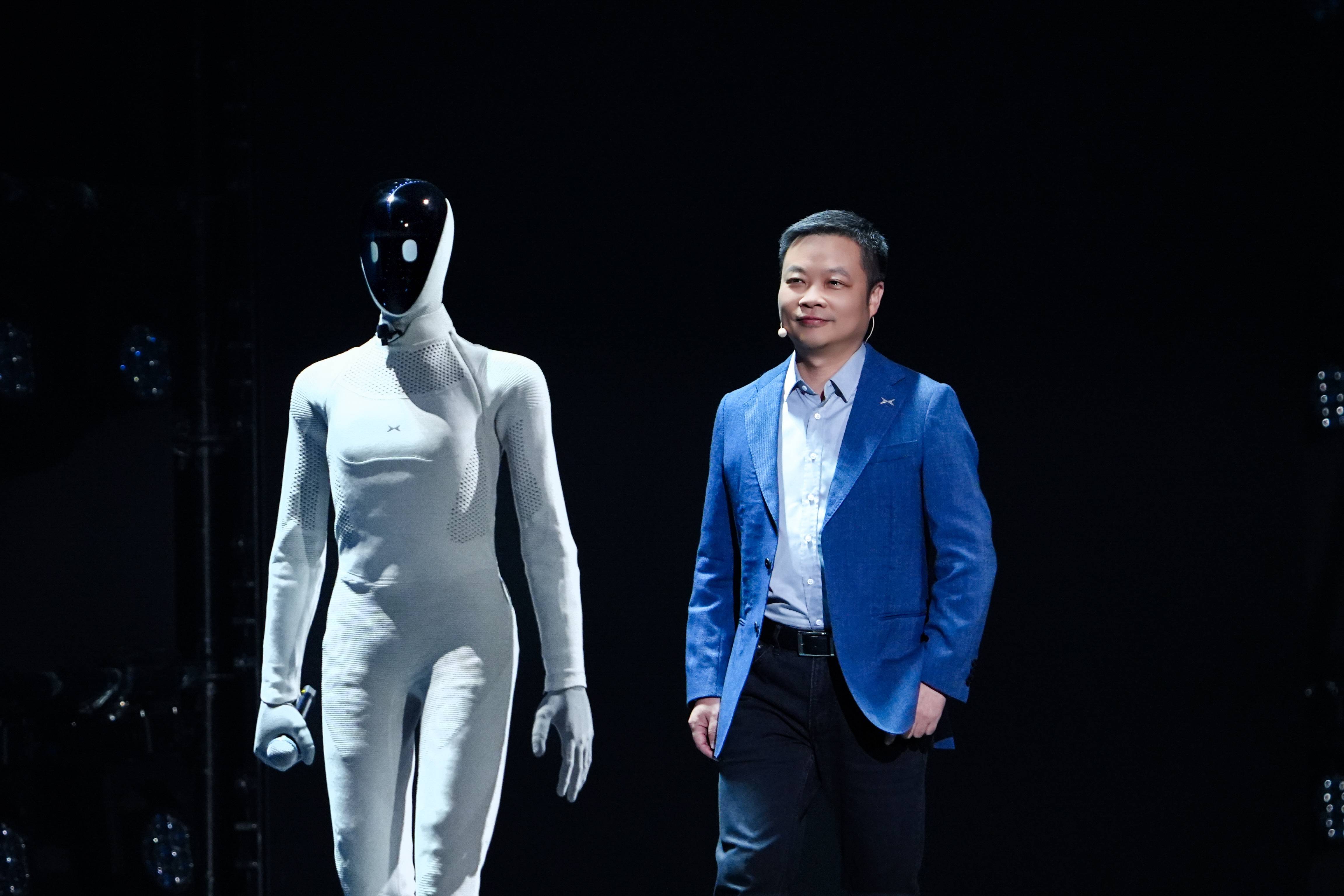
"For years, the AI industry has focused on making the brain smarter. But humans do not learn through the brain alone. We learn by touching, moving, trying, failing and trying again. I believe Physical AI must evolve in the same way", said He Xiaopeng, Chairman and CEO of XPENG. "Origin is about returning to that fundamental truth. The brain and body must evolve together. By connecting intelligence all the way through to physical action, we want to build AI that does not simply understand our world, but can work alongside us and grow through real-world experience."
Building the Full Technology Stack for Physical AI
The Turing Physical AI Architecture connects three systems operating at different levels and speeds:
- System 0 – Ultra-fast system: At the foundation, System 0 integrates physical body control into the AI closed loop. It coordinates underlying hardware systems for power, energy, communication and execution, giving AI direct feedback on the body's state and its ability to act safely and effectively.
- System 1 – Fast system: Powered by XPENG's VLA 2.0, System 1 serves as the real-time response layer. It interprets the surrounding environment and rapidly translates that understanding into executable actions.
- System 2 – Slow system: System 2 provides higher-level cognition, combining vision-language-based task planning with an Agent Runtime state machine to interpret objectives, plan complex tasks and coordinate the actions required to complete them.
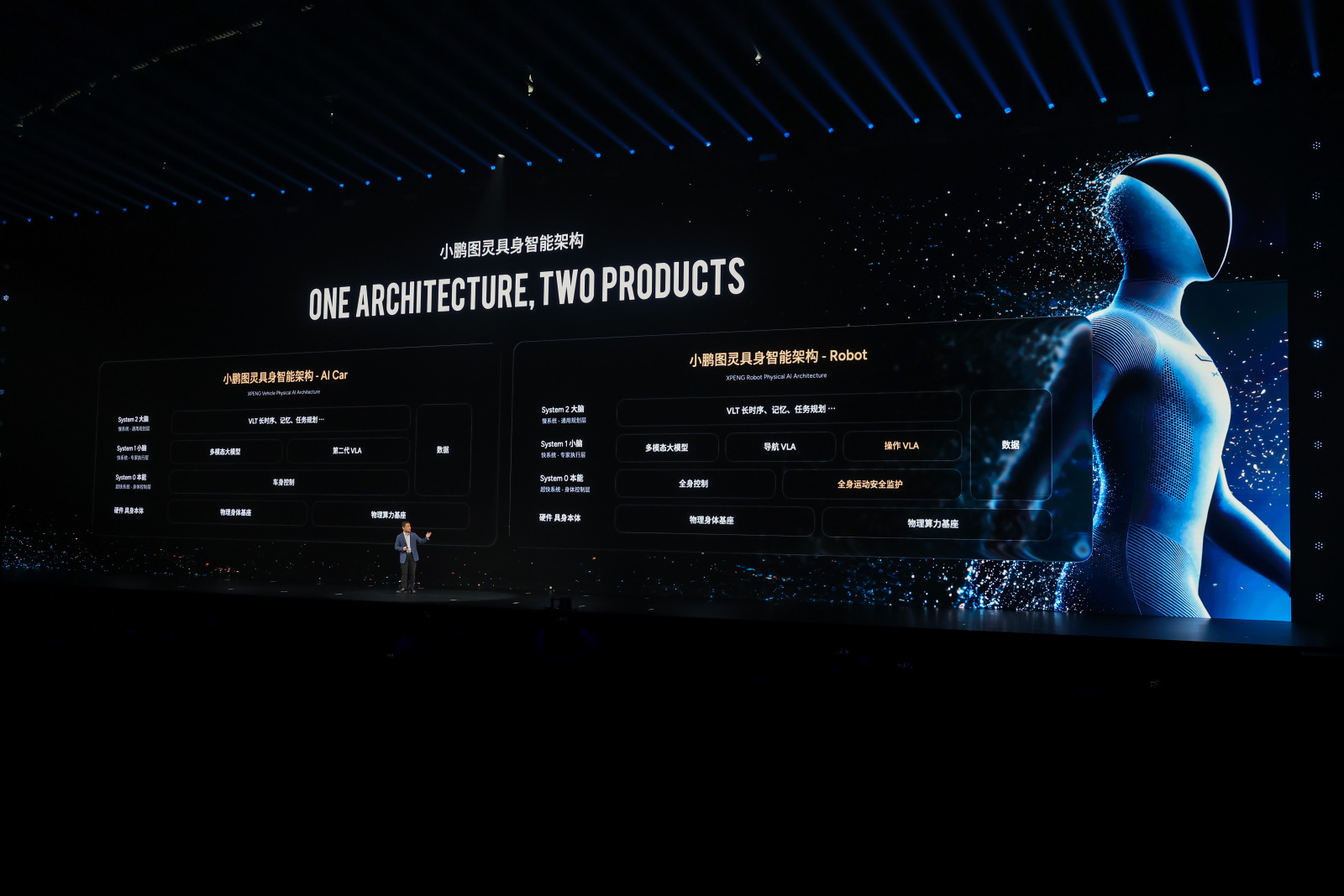
The architecture brings together action capabilities and multimodal understanding, connecting AI models with computing, control systems and physical hardware. Together, the three systems form a continuous loop connecting cognition with physical execution. Information about the body's state and the results of each action feeds back into the architecture, enabling ongoing adaptation and optimisation.
The Company also announced that its latest VLA 2.0 model, version 6.4.0, supports Agent-driven autonomous closed-loop training, increasing overall training speed by 10–12 times. The process also enables recursive self-improvement (RSI) and model self-distillation, supporting faster model development and adaptation across computing platforms.
This shared technology foundation also supports XPENG's development across automotive and robotics. The two product categories share computing, data infrastructure, control and safety technologies, while developing specialised capabilities for their respective hardware and tasks. Automotive R&D, testing and manufacturing experience supports robotics development, while advances in robotic sensing and interaction can inform future vehicle experiences.
Bringing Physical AI into the Entire Vehicle: Car as Robot
XPENG is extending AI beyond autonomous driving to coordinate the wider vehicle. Its X-VMC 2.0 vehicle motion control system connects propulsion, braking, steering, suspension and other vehicle systems, enabling AI to influence driving, safety, cabin comfort and energy management.At AI Day, XPENG introduced Turing AI Co-driving, bringing intelligent driving capabilities more deeply into the driving experience. Its first feature, VLA Adaptive Deceleration, uses road-scene understanding to adjust deceleration and energy recovery when the driver releases the accelerator. XPENG's tests in urban congestion conditions showed a 12.4% increase in usable driving range compared with energy recovery switched off. The feature is scheduled for its first OTA rollout in December 2026.
XPENG also presented AEX 360-degree active avoidance, a technology under development that coordinates vehicle motion to respond to potential collision risks. Since the rollout of VLA 2.0 model, XPENG reports a 13.93% reduction in vehicle accident claims in China.
Powered by XPENG's VLA 2.0, its NGP intelligent driving system is being validated across different markets and driving environments. Following localisation testing in Germany, the Netherlands and France, XPENG opened public urban NGP test rides at its Paris retail store in November, becoming the first Chinese automaker to offer public high-level assisted-driving experiences at a European retail location. The Company aims to begin its first NGP global rollout in the first half of 2027.
Developing the Complete Humanoid Robot: Brain and Body Together
XPENG is applying the same integrated approach to its humanoid robot IRON, developing its AI models, computing, perception, motion control and robotic hardware together.IRON features 76 degrees of freedom and more than 1,500 tactile sensing points, with tactile coverage across more than 80% of key body areas. Three proprietary Turing AI chips support onboard AI models and whole-body control. Its architecture combines multimodal understanding, task planning, navigation and manipulation with physical execution and safety monitoring.
XPENG is developing IRON as a work partner for real-world roles. It supports autonomous navigation, task creation through voice or app instructions, autonomous charging, abnormal-condition reporting and operating-health monitoring. IRON is scheduled to begin training as a store assistant in XPENG retail stores in Q1 2027, with its official public release targeted for Q2 2027.
To support development and deployment, XPENG has established a Robot Data Factory covering more than 250 scenarios and 15 job categories, reusing data-processing and evaluation tools developed through its automotive operations. A dedicated automated assembly line features more than 600 AI holographic quality-inspection items and over 1,000 tests for complete robots and key components.
XPENG is also developing an open robotics ecosystem through which partners can download capability packages, customise functions and develop and validate new skills for specific business applications. Its commercial model combines hardware sales, software subscriptions and the open platform, with token-based subscriptions and scenario-based services also under exploration.
Extending Physical AI from the Road to the Air
XPENG is extending its technology foundation into higher levels of autonomous mobility and new forms of transportation.Its Robotaxi programme has progressed from staffed to driverless road testing in eight months and obtained its L4 demonstration operation qualification in Guangzhou, China, merely 11 months after the business was announced. L4 driverless passengers tests have begun, with demonstration operations in selected areas planned by the end of 2026. XPENG is positioning itself as a technology and solution provider, supplying vehicle platforms and autonomous driving capabilities to operating partners. Its first purpose-built Robotaxi model for commercial deployment, YOYO-01, is scheduled for release in 2027. Looking ahead, XPENG aims to expand its robotaxi technology globally, working with operating partners to bring autonomous mobility services to international markets.
Beyond road transportation, XPENG ARIDGE is advancing its manned eVTOL programme towards airworthiness certification, having received Type Inspection Authorization documentation and completed certification flight testing. In the United Arab Emirates, ARIDGE is working with local partners to establish a low-altitude regulatory sandbox to support testing and explore international cooperation.
From intelligent vehicles and humanoid robots to autonomous mobility and flying vehicles, XPENG is applying a common technology foundation across physical platforms. By bringing AI, control and hardware together — and continually improving them through real-world deployment — XPENG aims to extend Physical AI into more products, services and markets.
About XPENG
XPENG is a leading global Physical AI company, dedicated to bringing artificial intelligence into the physical world to reshape future mobility and smart living. Through in-house R&D, XPENG has developed a full-stack Physical AI architecture spanning Turing AI chips, world foundation models, and highly integrated software and hardware applications. This unified technology foundation of XPENG powers an expansive product portfolio of smart EVs, robotaxis, and humanoid robots, advancing the deployment of Physical AI at scale. Headquartered in Guangzhou, China, XPENG is dual-primary listed on the New York Stock Exchange (NYSE: XPEV) and the Hong Kong Stock Exchange (HKEX: 9868). With global capabilities across R&D, manufacturing, sales, and services, XPENG drives continuous technological innovation and fosters an open Physical AI ecosystem, making life smarter, safer, and better for users worldwide. For more information, please visit https://www.xpeng.com/.