



 Global
 China
China Austria
 Australia
 Bahrain
 Belgium
 Colombia
 Denmark
 Deutschland
 España
 مصر
مصر France
 Greece
 Guatemala
 Hong Kong
 Ireland
 Ísland
 מדינת ישראל
 Luxembourg
 México
 Netherlands
 New Zealand
 Norge
Norge Portugal
 Singapore
 Sverige
 ไทย
ไทย UAE
UAE United Kingdom
 Poland
 Philippines
 Qatar
Qatar Switzerland
 Uruguay
EV Range in Real-World Driving: 4 Key Factors That Affect Range
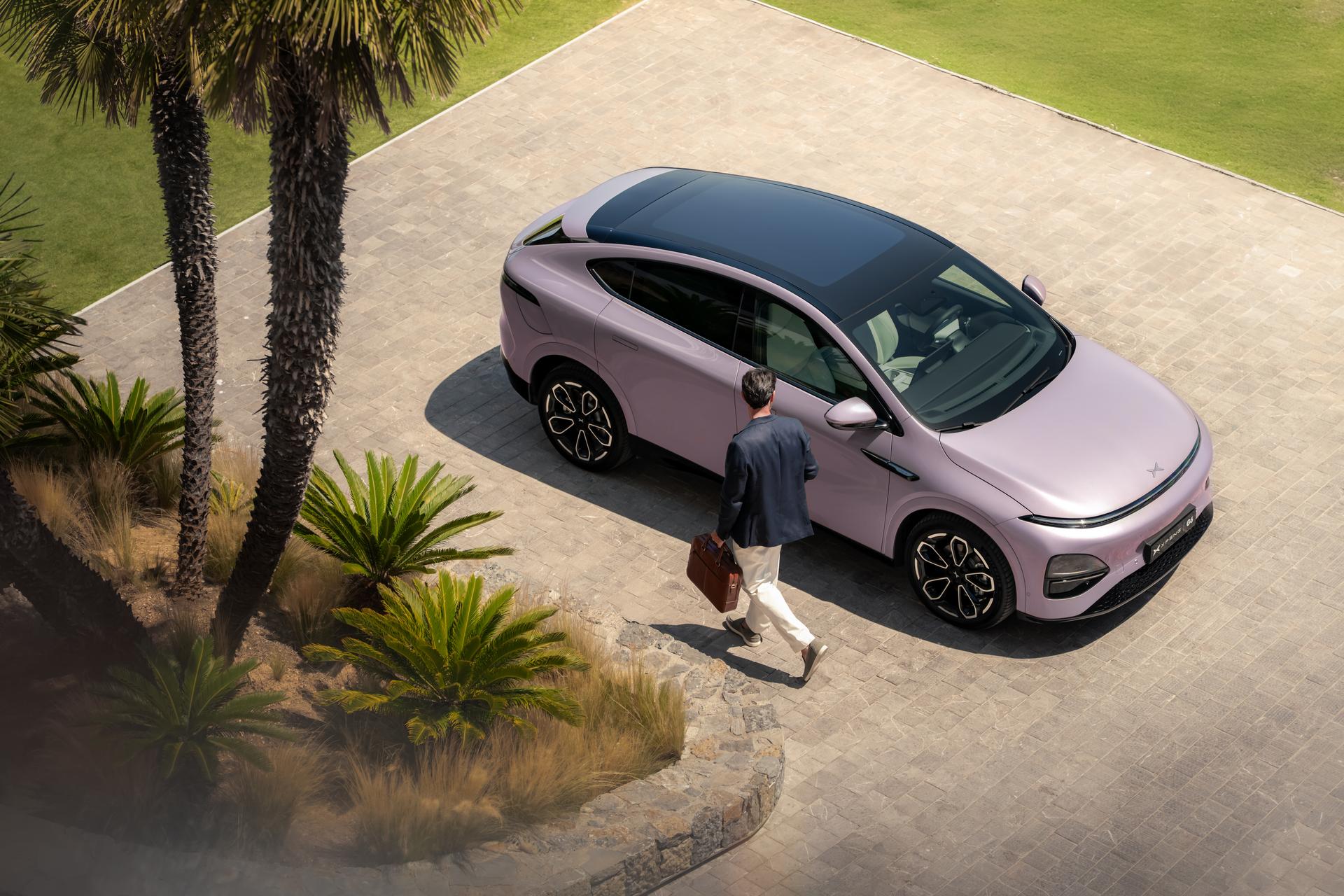
The range figure on the spec sheet is only half the story for electric cars in Australia. Whether you're comparing long-range electric cars in Australia or just curious about your own EV, what your car actually delivers each day depends on four factors: outside temperature, climate control, driving speed and long-term battery health.
How far an electric vehicle actually travels in daily use depends on more than a single figure. It comes down to the interplay of several factors. The most relevant are outside temperature, climate control, driving speed and the long-term condition of the battery.
Modern EVs are engineered for high efficiency. Even so, heating, cooling and aerodynamics demand extra energy in real-world conditions. Understand these connections, and you'll be better able to estimate your own consumption — and experience range as more predictable.
Note: actual electric car range can vary considerably depending on driving style, weather, vehicle configuration and how the car is used.
Key takeaways
Outside temperature has a strong influence on battery cell chemistry and can temporarily reduce an EV's usable capacity.
Climate control draws a noticeable amount of power; modern heat pumps are designed to minimise that energy loss.
Higher speeds increase aerodynamic drag, which cuts range far more quickly on the freeway than in city traffic.
A battery's State of Health (SoH) over the long term generally determines its usable capacity over the years.
Advanced thermal management systems such as XPENG's XHP 3.0 are designed to reuse waste heat and maximise efficiency in winter.
The 4 factors in detail
1. Outside temperature and the battery
Outside temperatures directly affect how well high-voltage batteries perform. Cold slows the chemical processes inside the cells, while extra energy is needed to heat both the battery and the cabin at the same time. As a result, usable range can drop temporarily.
Modern thermal management systems are designed to keep the battery as close as possible to its optimal temperature range. Advanced architectures such as XPENG's XHP 3.0 aim to make efficient use of available waste heat and reduce additional energy losses, particularly in winter.
Note: temperature-related range variations are operational and situational.
2. Cabin climate control
Because EVs produce very little usable waste heat, heating and air conditioning are powered almost entirely from the high-voltage battery. Especially in cold weather, comfort features can noticeably increase energy consumption.
To limit this, modern EVs use heat pumps, which work far more efficiently than conventional heating systems. That said, the more intensively you use climate control, the greater its impact on range.
3. Driving speed and aerodynamics
Aerodynamic drag rises disproportionately as speed increases. As a result, EVs use significantly more energy on the freeway than in city or country-road driving.
Aerodynamically optimised bodywork improves efficiency. In addition, vehicles with active air suspension can automatically lower at higher speeds to reduce drag and support efficiency on long trips.
4. Battery condition (State of Health)
Every high-voltage battery ages naturally over the years. State of Health (SoH) describes the remaining usable capacity relative to when the battery was new and is a key factor in long-term range.
Gentle operation, controlled charging and effective thermal management can help avoid thermal stress peaks and support battery longevity.
Note: SoH is a technical reference value, not a guarantee of a specific range.
Practical know-how: assessing battery condition
Battery certificate: when buying a used EV or assessing condition, an official battery certificate is recommended.
SoH value: a value above 80 per cent after several years is regarded in the industry as a sign of gentle operation and effective thermal management.
Important Note: State of Health is a technical reference value, not a guarantee of a specific range.
FAQs: EV range questions, answered
Q: Is WLTP range realistic in everyday driving?
A: For EV buyers in Australia, the WLTP figure is mainly useful for comparing vehicles. Depending on driving style, temperature and route profile, real-world range can differ — especially on freeway trips or in winter. And with XPENG's Ultra-fast charging, from 30% to 80% just takes 12 minutes.
Q: Should you always charge an EV 100 per cent?
A: For everyday use, a charging range of roughly 20 to 80 per cent is usually recommended. A full charge makes sense before longer trips.
Q: Does Eco mode extend range?
A: In many situations, yes. Eco mode optimises power delivery and climate control, and can moderately reduce energy consumption in daily driving.


