


[2026 Update on Intelligent Driving] Can I Trust Adaptive Cruise Control
Key Takeaways
- An adaptive cruise control system automatically adjusts your vehicle's speed to maintain a safe distance from the car ahead.- The system relies on advanced hardware, including millimetre-wave radars and high-definition cameras, to monitor the road environment.
- While an ACC assistant significantly reduces driver fatigue during highway journeys, it remains a Level 2 feature requiring constant driver attention.
- Extreme weather conditions, such as heavy rain or snow, can limit sensor visibility and require human intervention.
- XPENG — one of Australia's leading Chinese EV brands — integrates ACC in cars with active lane centring for a comprehensive, highly predictable driving experience.
When used correctly, an adaptive cruise control system is a highly reliable tool for electric car drivers, significantly reducing driving fatigue.
But what is adaptive cruise control? How accurate is it? This guide will walk you through the basics.
What Does Adaptive Cruise Control Do?
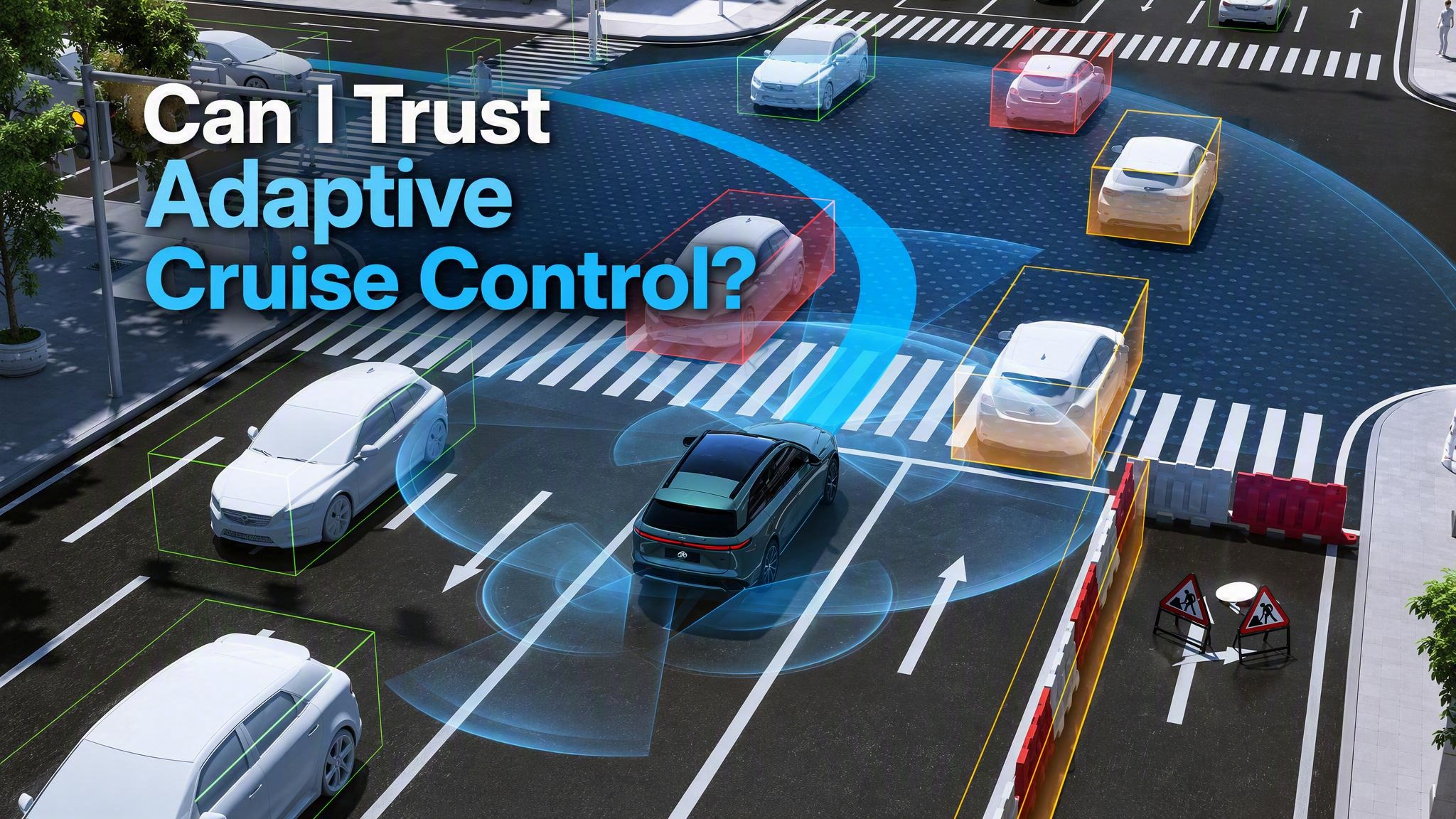
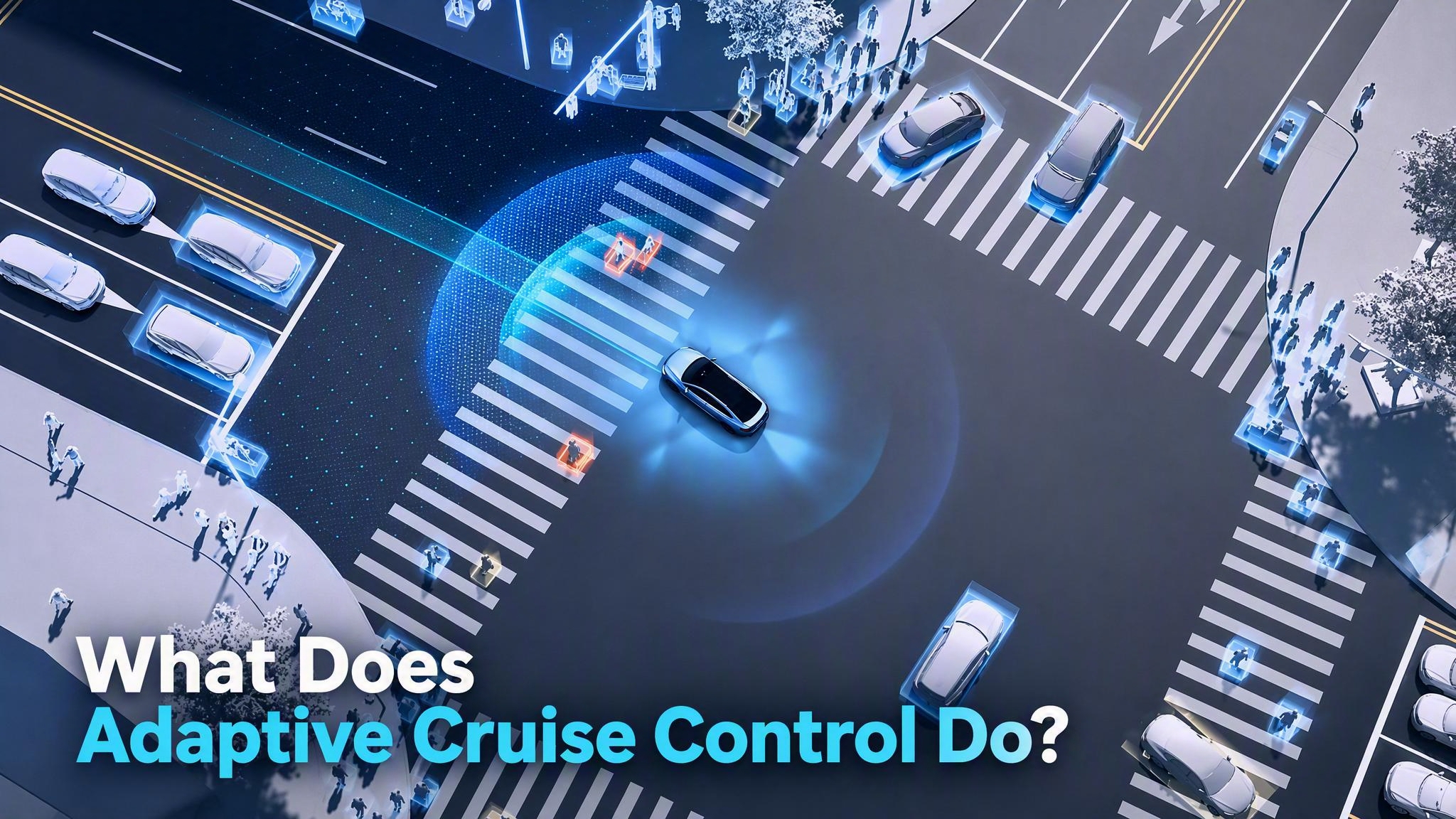
Adaptive Cruise Control is an intelligent system that automatically adjusts your speed to maintain a safe distance from the vehicle ahead. It is used to monitor the vehicle ahead using forward-facing sensors and automatically manage the accelerator and brakes to match the flow of traffic.Traditional cruise control systems require the driver to manually brake and reset the speed whenever traffic slows down. Modern ACC in electric cars solves this problem by utilising millimetre-wave radars and high-definition cameras mounted on the front of the vehicle.
These sensors bounce signals off the car ahead to calculate the exact distance and closing speed. If the lead vehicle slows down, the system automatically applies the brakes to maintain your pre-set safety gap.
Once the lane clears, the system accelerates smoothly back to your target speed. This continuous, automated adjustment removes the need to constantly shift your foot back and forth between pedals.
When is an ACC Assistant Most Effective on the Road?
On stretches of the motorway with fluctuating speed limits and traffic volumes, ACC prevents driver fatigue for electric cars in Australia by managing the most tedious parts of driving:- Highway Cruising: It eliminates the need to constantly shift your foot back and forth between pedals when following other vehicles.
- Traffic Jam Management: Advanced systems can bring the vehicle to a complete stop when the car ahead halts.
- Auto-Resume: When traffic begins moving again, a brief tap on the accelerator or a steering wheel button prompts the system to resume forward motion.
- Driver Limitations: Drivers must always be prepared to take over manually during complex urban driving, when approaching tight roundabouts, or in heavy rain that might temporarily obscure the camera lenses.
XPENG ACC Overview
XPENG vehicles utilise a robust combination of binocular cameras and radar sensors to read the road with high accuracy. Within the XPENG ecosystem, the intelligent system does not work in isolation:- XPILOT ASSIST Integration: The ACC assistant manages the longitudinal speed (accelerating and braking) in complete tandem with other smart features.
- Lane Centring Control (LCC): While ACC handles your speed, LCC gently assists the steering wheel to keep the vehicle perfectly centred in its lane.
- 3D Environment Perception: The upgraded visual perception identifies and classifies objects, allowing the system to react predictably to dynamic traffic situations.
- Absolute Comfort: This deep software integration creates a stable and intelligent driving experience, turning long commutes into a relaxed journey.
→ What is XPENG XPILOT Assistant
Conclusion
Trusting an adaptive cruise control system comes down to setting the right expectations. For electric vehicle owners in Australia, it is a powerful tool to reduce the physical and mental strain of driving, provided you remain attentive and ready to guide the vehicle. But at least for now, it is an assistant — not a replacement for the driver.


COPYRIGHT@XPENG INC.