


Why does an electric car only need one gear
To understand the reliability, it's worth taking a look at the physics.
An electric motor delivers its maximum torque from the very first revolution and operates efficiently over a very wide speed range, often from 0 to over 16,000 revolutions per minute.
In contrast, an internal combustion engine only develops its power within a narrow range of approximately 1,500 to 6,000 revolutions per minute. This is precisely why it needs six to ten gears to adapt this narrow range to different speeds.
The transmission in an electric car does not need to perform this task. Technically, it is a fixed reduction gearbox that translates the high motor speed into a suitable wheel speed. A single gear ratio is sufficient for this.
Even vehicles with two engines use a reduction gearbox per axle and thus remain input gearboxes for each drive unit.
Fewer components, fewer weak points
A conventional automatic transmission consists of hundreds of moving parts: clutch packs, a torque converter, a control unit with hydraulics, planetary gear sets, and numerous valves. In contrast, a single-speed transmission in an electric car is essentially an encapsulated reduction unit with a differential, often referred to as a drive unit. It operates without clutches, solenoids, or hydraulic actuation.
Fewer components statistically mean fewer points where something can fail. Furthermore, the encapsulated unit typically requires no oil change over its entire lifespan, eliminating an entire maintenance category.
What the breakdown data actually shows
Theory is one thing; real data is another. The ADAC breakdown statistics are considered one of the most comprehensive analyses of their kind in Europe and are based on 3.6 million breakdowns from 2024. The results are revealing.
For vehicles aged two to four years, the ADAC recorded 3.8 breakdowns per 1,000 electric cars compared to 9.4 breakdowns per 1,000 combustion-engine vehicles, as the analysis at eMOBILITY ONLINE shows [1].
Particularly relevant to our topic: The most frequent cause of breakdowns in electric cars is the 12-volt on-board battery, which is responsible for about half of all EV breakdowns, according to a summary by ArenaEV [2]. The transmission or drivetrain hardly appears in these analyses. In addition, What Car? Reliability Survey 2025, based on 32,493 owner responses, gave pure electric cars a reliability rating of 90.4 per cent, up from 87.7 per cent in the previous year, as documented by What Car? [3] .
Wouldn't a 2-speed gearbox be better?
This raises a valid question. Some manufacturers are using a two-speed transmission, including Porsche in the Taycan and Audi in the e-tron GT. The second gear improves efficiency at high speeds and can optimise acceleration. Doesn't that sound like the superior solution?
History provides a more nuanced answer. Tesla originally intended to use a two-speed transmission in the first Roadster. However, these transmissions repeatedly failed during development, so the production vehicle was ultimately delivered with a single-speed transmission, as described by InsideEVs [4].
The reason is understandable: an additional gear brings back precisely the complexity that electric car transmissions typically avoid, namely clutches, synchronizers, and a shifting mechanism. For most drivers' everyday driving, the efficiency gain is minimal, while the risk of failure increases.
What this means for long-term ownership
This results in concrete advantages for electric car buyers in Australia.
An electric car transmission of this type does not require transmission oil changes, which can be a recurring expense in higher-quality combustion engine vehicles.
There is no clutch wear, no aging of a torque converter, and no damage from hard gear changes during sporty driving.
The housing of the reduction unit is typically designed to match or exceed the service life of the rest of the vehicle structure. This shifts the maintenance budget to wear parts such as tyres, brake fluid, and cabin air filters, as well as the aforementioned 12-volt battery. The drivetrain itself plays a subordinate role in this.
This lower mechanical risk can also be an advantage when reselling, especially after the warranty has expired.
What you should look for in a well-designed electric car
Those looking for a reliable electric car in Australia can pay attention to a few key technical features.
An integrated drive unit is advantageous, in which the motor, inverter and reduction gearbox are combined in one housing.
An 800-volt architecture reduces the electrical load in the powertrain. Sophisticated thermal management protects the components, and a manufacturer's warranty should cover the drive unit for at least eight years or 160,000 kilometres.
Product recommendation: XPENG NEW G6
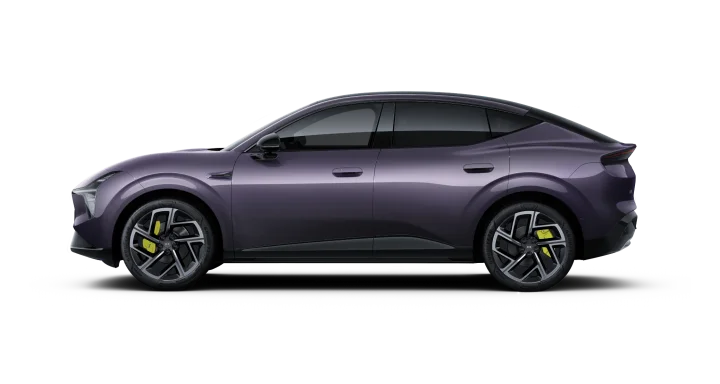
The XPENG NEW G6 — one of Australia's leading Chinese EV brands — is a good example of a solidly implemented input gearbox concept on the Australian market.
It uses a permanent magnet synchronous motor with a single-speed gearbox.
The 800-volt architecture enables EV ultra-fast charging at up to 451 kW, allowing the battery to be charged from 10 to 80 per cent in just 12 minutes. The WLTP range is up to 525 kilometres.
The input gearbox is not a makeshift solution, but a deliberate technical simplification, the reliability of which has now been confirmed by the data.
If you would like to experience this simplicity for yourself, you can arrange a test drive with the XPENG NEW G6 at xpeng.com/au.


