



Many Australian drivers still believe that an electric car's battery can be drained within an hour in a traffic jam if the air conditioning is running. But is that really true? In fact, the air conditioning usually consumes significantly less energy when the car is stationary than many people assume.
This fact check shows how much battery power the air conditioner actually needs, which factors influence consumption, and how many hours one can realistically spend stuck in traffic with the cooling system switched on.
The myth and why it's not true
Many drivers transfer their experiences from combustion engine vehicles directly to battery electric cars. In a gasoline or diesel car, the engine drives the air conditioning compressor, meaning the engine has to continue running and burning fuel even when stationary. This leads to the misconception that an electric car also loses energy quickly in traffic jams.
In fact, the compressor in an electric car operates purely electrically and draws its energy directly from the high-voltage battery. The drive motor remains completely off when the car is stationary. As a result, energy consumption is significantly lower than many assume, as confirmed by the ADAC [1].
The ADAC measurement in practical testing
In July 2024, the ADAC (German Automobile Club) simulated a realistic summer traffic jam in its new climate test facility in Landsberg am Lech. The test vehicle was a Tesla Model Y with a 60 per cent battery charge. For over eight hours, outside temperatures of up to 35 degrees Celsius were set, and UV lamps simulated solar radiation. The air conditioning ran constantly at 20 degrees in camping mode.
The result is sobering. The air conditioning system consistently required around 1.5 kilowatts, while the interior temperature remained stable below 25 degrees Celsius. After eight hours, the vehicle had consumed approximately 12 kWh. This corresponds to a battery loss of around 16 per cent, or about 8 kilometres per hour [2]. The pure electricity consumption of the electric car while stationary is therefore at a level that allows it to easily get through most traffic jams.
How long does the battery really last?
Let's convert these values to other battery sizes. With a consumption of 1.5 kWh per hour, the following picture emerges:
With a 100 per cent charge and 75 kWh usable capacity, the air conditioner is theoretically sufficient for around 50 hours.
At 50 per cent charge, it's still about 25 hours.
Even with only 20 per cent remaining charge, around 10 hours are still possible.
These figures are consistent with analyses from English-speaking countries. An evaluation by PolitiFact concludes that a 62 kWh battery that is half-charged can provide between 10 and 15 hours of air conditioning in a stationary vehicle. In extreme heat above 35 degrees Celsius and direct sunlight, peak consumption can briefly rise to 2 to 3 kW [3], which is why a small safety reserve remains advisable.
Internal combustion engine versus electric car in a traffic jam
The comparison with the combustion engine shows where the air conditioning consumption of a car really makes a difference.
According to the ADAC, a combustion engine in summer traffic jams with the air conditioning running consumes between 1 and 1.5 litres of fuel per hour [4]. Converted to primary energy consumption, this corresponds to around 10 to 15 kWh per hour, about seven to ten times that of an electric car. In addition, there are exhaust fumes, engine noise and vibrations lasting for several hours.
When it comes to the energy consumption of air conditioning in a car, the combustion engine lags significantly behind the electric car as soon as the vehicle is stationary for an extended period. Therefore, for those who associate traffic jams with actively using the engine, the electric car offers the more economical solution.
Five tips for lower fuel consumption in traffic jams
With a few simple measures, electric car owners in Australia can further reduce energy consumption while stationary:
Use the camping or stationary climate control mode. These functions are specifically designed for extended periods of inactivity and operate more efficiently than the normal driving climate control.
Don't set the temperature too low. 22 to 24 degrees is sufficient for a comfortable climate. Every degree lower noticeably increases energy consumption.
Use sun protection. Sunshades, tinted windows or a lowered panoramic roof blind reduce the heat load.
Pre-condition the car before starting your journey. If the car is still plugged in, the interior can be cooled down without draining the battery.
Plan with a reserve. A buffer zone of 10 to 15 per cent remaining charge covers unexpected road closures.
This way, the electric car's consumption per 100 km in summer can realistically be kept close to the WLTP figures, even if the air conditioning is running regularly.
Which electric cars are particularly resistant to traffic jams?
Three factors determine how calmly you face a long traffic jam in an electric vehicle. First, a sufficiently sized battery of around 75 kWh.
Secondly, an efficient heat pump that further reduces the energy consumption of the air conditioning in the car.
And thirdly, a true stationary climate control function that can permanently regulate the temperature of the interior, independent of driving conditions.
Our tip: The XPENG NEW G6 for relaxed summer drives
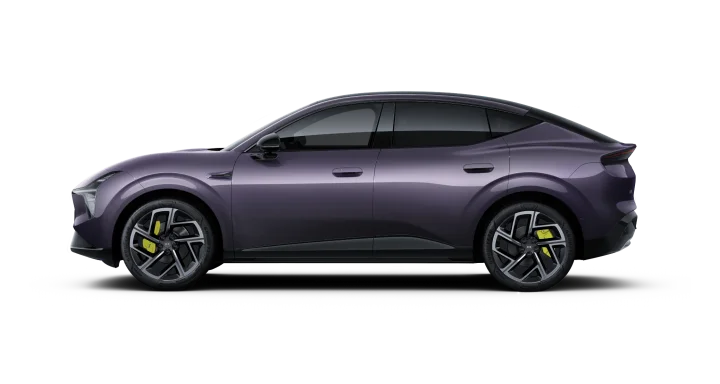
Anyone looking for a long-range electric SUV that meets these requirements should take a look at the XPENG NEW G6. The NEW G6 offers a WLTP range of up to 525 kilometres with an energy consumption of 17.5 kWh per 100 km. This means that the electric car's consumption per 100 km is in a range that leaves comfortable reserves even during extended periods of idling with the air conditioning on.
Thanks to its 800-volt architecture and 5C battery, the NEW G6 charges from 10 to 80 per cent in just 12 minutes. So, after a long traffic jam, the full range is quickly restored. The interior is designed for extended journeys, featuring a heat-insulated panoramic glass roof and multi-zone climate control. It's the kind of comfort you expect from one of Australia's leading Chinese EV brands.
Ready for relaxed summer drives? Visit the XPENG NEW G6 product page to discover more details about range, charging performance and features.


