

 Global
 China
China Austria
 Australia
 Bahrain
 Belgium
 Colombia
 Denmark
 Deutschland
 España
 مصر
مصر France
 Greece
 Guatemala
 Hong Kong
 Ireland
 Ísland
 מדינת ישראל
 Luxembourg
 México
 Netherlands
 New Zealand
 Norge
Norge Portugal
 Singapore
 Sverige
 ไทย
ไทย UAE
UAE United Kingdom
 Poland
 Philippines
 Qatar
Qatar Switzerland
 Uruguay
Five stars is a good start, but it's not the whole picture. Here's what to check when you're comparing safety ratings on electric cars in Australia.
Safety is one of the biggest factors in choosing a new car — and for electric vehicles, buyers often have even more questions. How does the battery affect crash performance? Do the ratings still mean the same thing? Here's a practical guide to reading safety ratings in Australia.
Note: current ANCAP and Euro NCAP ratings use weighted percentage scores across four protection areas. The 37-point structure below shows how the core crash tests themselves are scored.
Know the system: ANCAP and Euro NCAP
In Australia, cars are rated by ANCAP (the Australasian New Car Assessment Program), which tests using protocols closely aligned with Euro NCAP. The same core crash tests apply: frontal offset impact at 64 km/h into a deformable barrier, and side impact at 60 km/h. There's also the optional side pole test at 32 km/h.
The star rating is a total; the detail is in the sub-scores
The star rating, out of a possible five, is based on points scored across frontal impact (up to 16), side impact (up to 16), the side pole test (up to 2) and seatbelt reminders (up to 3) — 37 points under the classic scoring structure.
But here's the key: each test also has a minimum score requirement. A life-threatening injury risk in any key body region can see the final star struck through. So when you compare two five-star cars, dig into the sub-scores:
How did the car perform in the frontal test (head, neck, chest, legs)?
How did it perform in the side test (head, chest, abdomen, pelvis)?
Did it earn the pole test bonus (head-protecting airbag performance)?
What about the battery?
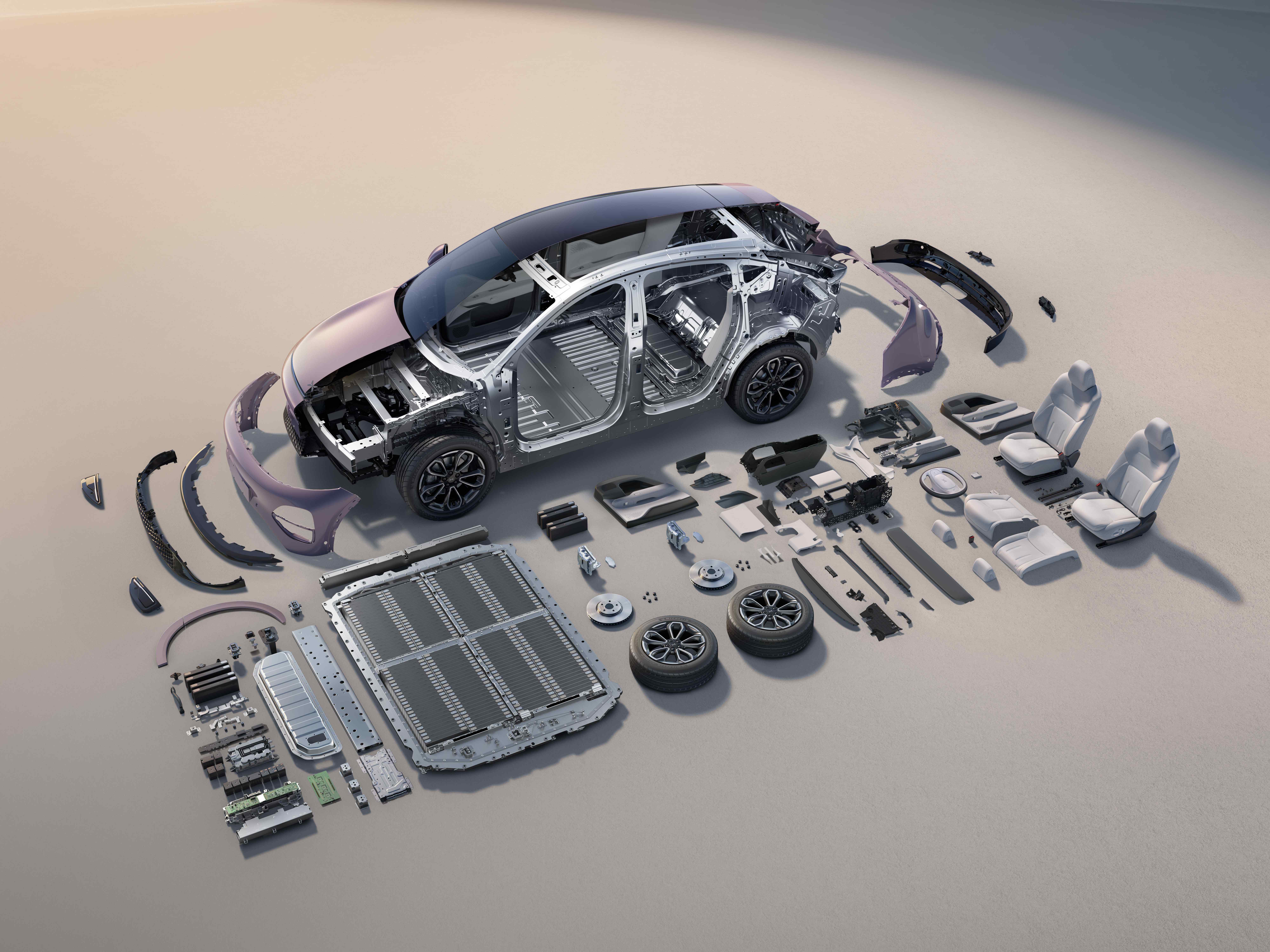
For electric cars, the battery pack adds specific safety considerations. High-voltage systems are designed so that, in a crash, the battery and its enclosure help protect occupants. Modern battery safety is a major focus of EV engineering.
When reading a rating for an EV, look for how the manufacturer describes battery and high-voltage system protection as part of its safety story. Consider how the battery is mounted and protected in the body structure. Ask how high-voltage components behave in a crash, and how thermal management supports battery safety over the vehicle's life. EV battery protection is a growing focus for both ANCAP and Euro NCAP, so a current rating reflects the latest thinking in this area.
Look beyond the stars
Other things worth checking:
Child restraint assessment — how the car works with child seats, including ISOFIX anchor points and top tethers, and how the restraints behave in a crash
Pedestrian protection — how the front of the car treats people outside it, including head impact zones across the bonnet
Safety assist features — autonomous emergency braking, lane keeping and blind-spot monitoring, which ANCAP now weighs into its ratings. A strong safety-assist score means the car helps you avoid crashes, not just survive them
The bottom line
A five-star ANCAP result is the strongest single signal of crash safety available in Australia. But the best cars go beyond the headline: strong scores in every area, a proven pole test, careful battery protection and solid safety-assist features.
When you're comparing electric cars, read the rating like an engineer would. Look at the sub-scores, check the battery story, and weigh the safety-assist features. Before you sign, ask the dealer a few practical questions: How is the battery integrated into the crash structure? What high-voltage measures protect occupants and first responders? What does the battery warranty and health guarantee cover? The right choice becomes much clearer — and you'll know exactly why that five-star sticker is (or isn't) deserved.
See our range of electric cars in Australia and their safety features.