



From family camping trips to fully loaded material transport to construction sites: trailers are an integral part of everyday life for many electric vehicle owners in Australia. But how well does towing actually work with an electric car? Anyone considering an electric car with a tow hitch usually asks themselves the same burning question: How much does the range decrease when towing, and what about efficiency?
This article provides the answers: We summarise the most important test results from ADAC and independent testing institutes, explain the physical background and give practical tips for everyday life with e-trailer combinations.
Why supporters of electric cars are more affected than those of combustion engines
When towing a trailer, three effects combine to increase energy consumption.
Firstly, the additional weight increases rolling resistance, and the drive system has to constantly draw more power.
Secondly, air resistance increases, and this factor dominates at higher speeds. The power required to overcome air resistance increases with the cube of the speed.
Thirdly, while recuperation helps with braking, the increased energy consumption due to weight and air resistance significantly outweighs the recovered energy, according to an analysis of the influence of payload.
Why do electric car drivers feel this more than drivers of combustion-engine cars?
The shorter base range and longer charging stops exacerbate the effect. A study by Arval and UTAC found a range reduction of 23 to 31 per cent for passenger cars when towing a trailer, while diesel vans under comparable conditions are estimated to experience a reduction of around 15 per cent [1].
What the test data shows
Concrete measurements make the effect tangible:
In an ADAC practical test with a Kia EV6 and a 1,600 kg caravan over 1,281 kilometres, consumption increased from a typical 20 kWh to 36.6 kWh per 100 km. This corresponds to an increase in consumption of 83 per cent [2].
In tests conducted by Arval and UTAC in Millbrook, a battery electric car with a full payload and a 500 kg trailer load retained only about 77 per cent of its real-world range [3].
As a rough rule of thumb, the ADAC states in its overview of electric cars with trailer hitches that the range can decrease by about half with a heavy caravan [4].
That aerodynamics often weighs more heavily than pure weight is shown by an ADAC test on roof structures and bicycle carriers: Two bicycles on the roof instead of on the rear increased consumption by around 25 per cent [5].
The message behind this is: Weight plays a role, but at motorway speeds, the frontal area and shape of the trailer often have a greater impact on actual fuel consumption.
Does an unused trailer hitch reduce the range?
Many prospective buyers wonder whether the towbar itself consumes energy. An electrically retractable towbar has a negligible impact on air resistance when retracted. A fixed towbar can minimally increase air resistance, but the effect on range is typically less than one per cent. The loss only becomes noticeable once something is attached or mounted, such as a trailer, bike rack, or roof box.
Important to know: A retrofitted towbar does not automatically increase the permissible towing capacity of an electric car. The value stated in the vehicle registration documents always remains decisive, as a current overview of towing capacities for electric cars confirms.
This helps to reduce efficiency loss
With a few measures, the increased fuel consumption when towing a trailer can be noticeably reduced.
Drive slower. Because the power required to overcome air resistance increases with the cube of the speed, reducing your speed from 130 to 100 km/h significantly lowers fuel consumption when towing.
Choose an aerodynamically efficient trailer or caravan with a tapered front and smooth underbody.
A guide to aerodynamic trailers shows that at high speeds, shape can be more important than weight alone [6]. Pay attention to the correct tyre pressure, which is often slightly higher when towing, to reduce rolling resistance.
Use a heat pump and preconditioning so that the heating output does not further reduce the range in winter.
Plan charging stops at drive-through charging stations where you don't need to unhitch the trailer.
What matters when buying a powerful electric car
Anyone researching EV towing capacity in Australia should check a few key points before buying.
A braked towing capacity of at least 1,500 kg covers most caravans and trailers.
A vertical load of 75 to 100 kg allows a rear carrier with two e-bikes.
A battery capacity of around 80 kWh keeps the range in trailer operation at a practical level of around 250 to 300 km.
An 800-volt architecture ensures short charging stops, which partially compensates for the higher consumption.
Helpful features also include assistance systems for trailer operation and a standard heat pump.
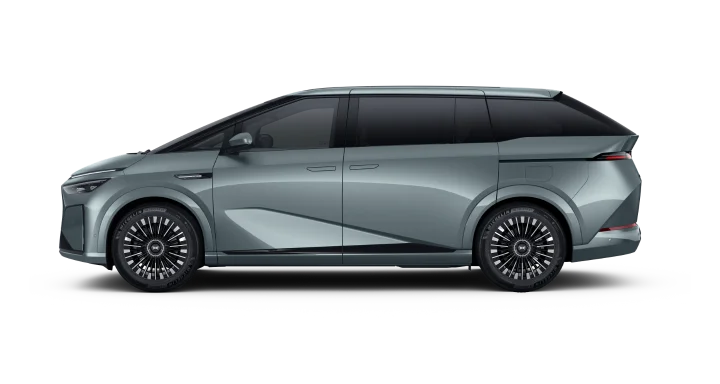
Recommendation: XPENG X9
One of the best electric vehicles for towing in Australia is the XPENG X9. Built on our true 800V high-voltage silicon carbide platform, it pairs a 10% to 80% charge in just 12 minutes with segment-leading energy consumption of 20 kWh/100 km (WLTP) — leaving plenty of practical range reserve for towing trips.
Thanks to its 800-volt architecture, charging stops on long journeys with a trailer can be efficiently shortened. For everyday convenience, an electrically retractable trailer hitch and a trailer assist system are available. As one of Australia's leading Chinese EV brands, XPENG combines this towing capability with a solid efficiency base even when driving solo.
Further details can be found on the XPENG X9 product page.
Reference
FleetNews -- Towing reduces electric vehicle real-world range by almost a third
ADAC -- Holiday with an electric car and caravan: Is that already possible?
ADAC -- Electric cars with tow hitches: These models are available
ADAC -- ADAC range test: Electric car with bicycle carrier or trailer
Auto column -- Electric car with towing capacity 2026: Which e-car can tow caravans, horse trailers and bicycle carriers?


