



XPENG has tackled a long-standing industry challenge through system-level co-optimisation of device selection, module packaging and adaptive control. The goal is to balance efficiency, reliability, cost and production consistency in hybrid Si/SiC traction inverters. The result is efficiency equivalent to a full SiC design under real operating conditions in battery electric cars.
Beyond the technology itself, XPENG — one of Australia's leading Chinese EV brands — has closed the full loop, from R&D iteration and vehicle-level validation to mass production and scaled deployment, making hybrid Si/SiC traction inverters the first of their kind to reach commercial adoption at scale.
This research, published on the cover of a leading international journal, confirms XPENG's engineering depth and industrialisation capability. It also offers the wider power-electronics industry a reusable engineering blueprint, supporting progress through open technical exchange.
Paper Source: Commercialisation and Cost-Optimization of a Hybrid Si/SiC Traction Inverter
Recently, the technical paper on XPENG's self-developed Hybrid Silicon/Silicon Carbide (Hybrid Si/SiC) traction inverter — Commercialisation and Cost-Optimization of a Hybrid Si/SiC Traction Inverter — was selected as the cover feature of a flagship IEEE journal. According to the journal's information and public industry data, this selection is a milestone: it is the first cover feature led by an original equipment manufacturer (OEM) team, and the first cover feature published by an organisation based in mainland China. The achievement highlights XPENG's leadership in electric-drive and power-electronics technology.
Authored by XPENG's powertrain team, the paper systematically presents the hybrid Si/SiC traction inverter's system architecture, control strategy and power module packaging design, backed by experimental data and engineering results from real driving conditions and vehicle validation. Most importantly, it confirms that the technology has completed the mass-production loop.
Industry Breakthrough: "Full-SiC-Equivalent Efficiency" in a Hybrid Si/SiC Design
Hybrid Si/SiC is not a new concept, but it has long struggled to reach production. As the paper's introduction notes, commercialisation faces "substantial challenges" — centred on device selection, area ratio, control strategy, and thermal and reliability management.
In response, the paper's abstract states its technical positioning directly: "This article proposes a hybrid Si/SiC EV inverter design that offers equivalent efficiency to the full SiC version."
To achieve this, XPENG's powertrain team developed a hybrid Si/SiC traction inverter that optimises the area ratio of power devices within a single module, combines it with advanced packaging design, and pairs it with load-adaptive control for dynamic optimisation across different load ranges. As the paper describes: "Combined with load-adaptive controls, the proposed hybrid Si/SiC inverter demonstrates an efficiency improvement from 96.3% to 98.7% compared with a full-silicon solution under the same driving conditions."
For long-range electric cars, this result points to a highly valuable, replicable engineering path: through system-level co-design of device, control and packaging, hybrid Si/SiC can approach full-SiC efficiency in real driving cycles — laying the technical foundation for scaled deployment.
From Technical Incubation to Scaled Delivery: Closing the Mass-Production Loop
In academic research, "feasibility validation" often focuses on prototypes or limited operating conditions. Industrialisation, by contrast, means the technology must withstand far more complex engineering constraints within a complete vehicle, and remain consistently reliable through scaled manufacturing and long-term use. For a traction inverter, this involves not only efficiency and peak/continuous current capability, but also thermal performance, packaging and cost consistency.
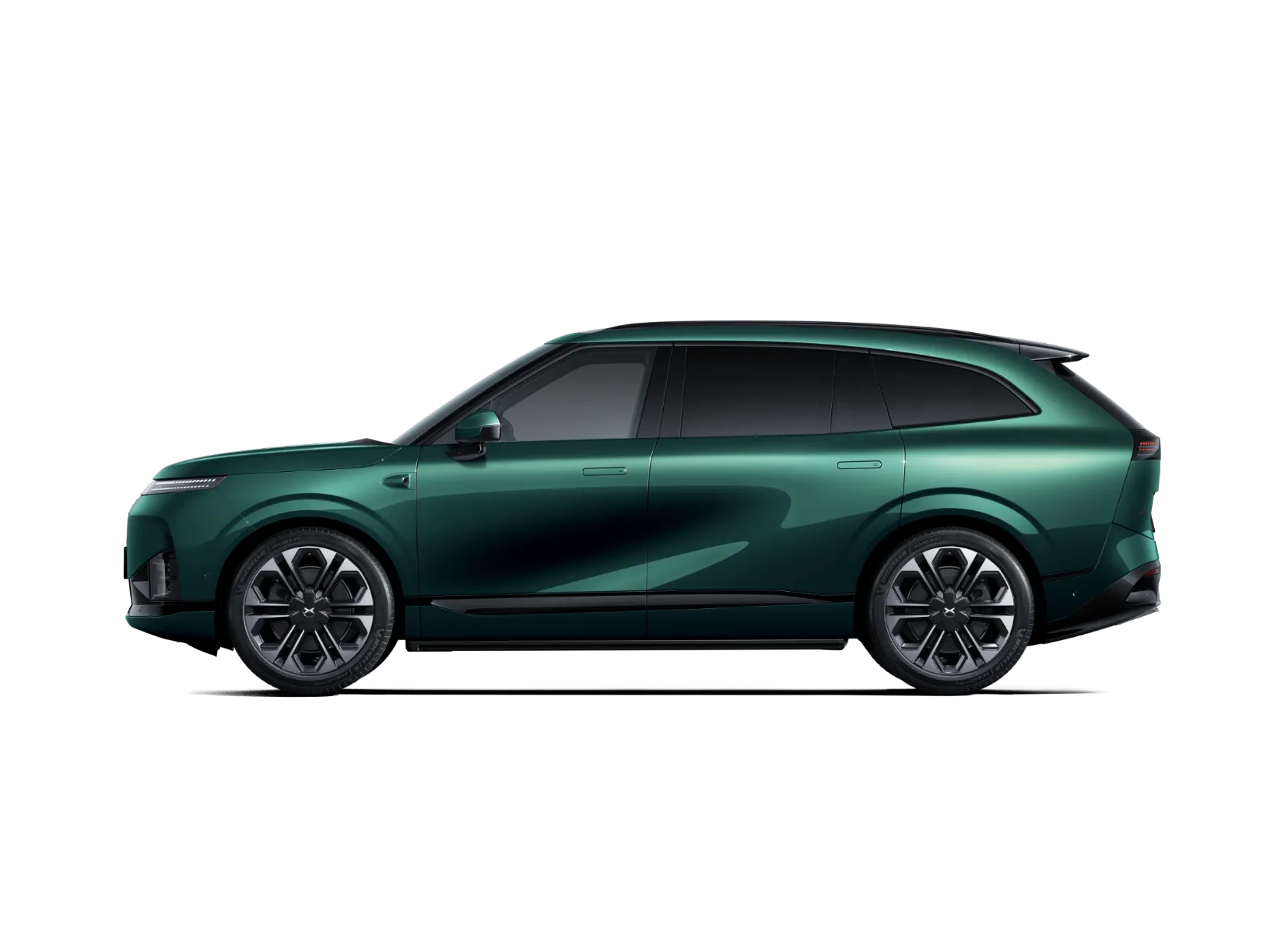
The paper's industrialisation section discloses: "This traction inverter has been validated on almost 700 engineering vehicles in XPENG X9, and has been in mass production since November 2025, with more than 15,000 vehicles on the road equipped with this Si/SiC traction inverter."
It also notes: "This work represents the first implementation in a commercial traction inverter, and marks the first time the technology has entered large-scale production in the industry."
These statements provide clear, verifiable evidence of the closed loop — from technical roadmap and engineering validation, to mass production and scaled deployment.
Engineering Excellence, Delivered at Industrial Scale
Being selected for a flagship IEEE journal and featured on its cover reflects both the professional value of XPENG's hybrid Si/SiC traction inverter technology in power electronics and XPENG's capability to turn innovation into a product that can be delivered at scale — technology that matters for electric cars in Australia.
XPENG believes the ultimate value of key EV technologies must return to users and the industry: reliable operation in real-world conditions, mass-production delivery, and consistent performance over long-term use. The technology is now being deployed platform-wide across electric car models, including the XPENG X9 and the XPENG L03.
Read the full paper on the IEEE website: Commercialisation and Cost-Optimization of a Hybrid Si/SiC Traction Inverter


