



 Global
 China
China Austria
 Australia
 Bahrain
 Belgium
 Colombia
 Denmark
 Deutschland
 España
 مصر
مصر France
 Greece
 Guatemala
 Hong Kong
 Ireland
 Ísland
 מדינת ישראל
 Luxembourg
 México
 Netherlands
 New Zealand
 Norge
Norge Portugal
 Singapore
 Sverige
 ไทย
ไทย UAE
UAE United Kingdom
 Poland
 Philippines
 Qatar
Qatar Switzerland
 Uruguay

kW and kWh sound similar but mean very different things. Here's the difference, in plain terms — and why both matter for charging time and range.
When switching to an electric car in Australia, two terms come up especially often: kW and kWh. Although they sound similar, they describe different technical aspects that are crucial for charging time and range. This overview explains the differences in plain terms and shows how the two figures work together in everyday driving.
What does kW mean in an electric car?
In an electric vehicle, kW matters in two areas:
Drive power: the output of the electric motor (comparable to horsepower)
Charging power: the speed at which energy flows into the battery
The higher the available charging power, the shorter charging stops can be — provided the vehicle, charging infrastructure and conditions all work together.
What is a kilowatt-hour (kWh)?
A kilowatt-hour (kWh) is a unit of energy. It indicates how much energy a battery can store — comparable to the size of a fuel tank.
A larger kWh capacity can enable more range.
Actual consumption, however, depends strongly on driving style, speed, temperature and vehicle weight.
kW vs. kWh
A helpful model is the water analogy:
kW (power): how far the tap is opened
kWh (energy): how big the bucket is
A large battery (kWh) is of little use if it's only charged slowly (kW). Conversely, high charging power is of little use if the battery can only store a little energy. What matters is how the two values work together.
How to convert kW to kWh
The calculation of the energy stored in your battery is simple (assuming constant charging power): Energy (kWh) = Power (kW) × Time (hours)
Example: If you charge your car for 30 minutes (0.5 hours) at a constant 100 kW, you put 100 × 0.5 = 50 kWh into the battery.
kW & kWh calculator
An interactive calculator lets you enter the charging power (kW) and charging time (hours) to see the energy charged in kWh.
How long does charging an electric car take?
Charging time comes down to a simple formula: Charging time = Battery capacity (kWh) ÷ Charging power (kW)
Charging time calculator
- Let's choose the XPENG New G6's AWD Performance as an example:
The Battery Size is 80.8 kWh, and the charging power is up to 451 kW. The theoretical estimated charging time is calculated as Time (h) = Capacity (kWh) ÷ Power (kW). Therefore, the charging time for the XPENG New G6's AWD Performance is 80.8 ÷ 451 ≈ 0.18 h (converted to minutes, approximately 11 minutes), which is a theoretical value.
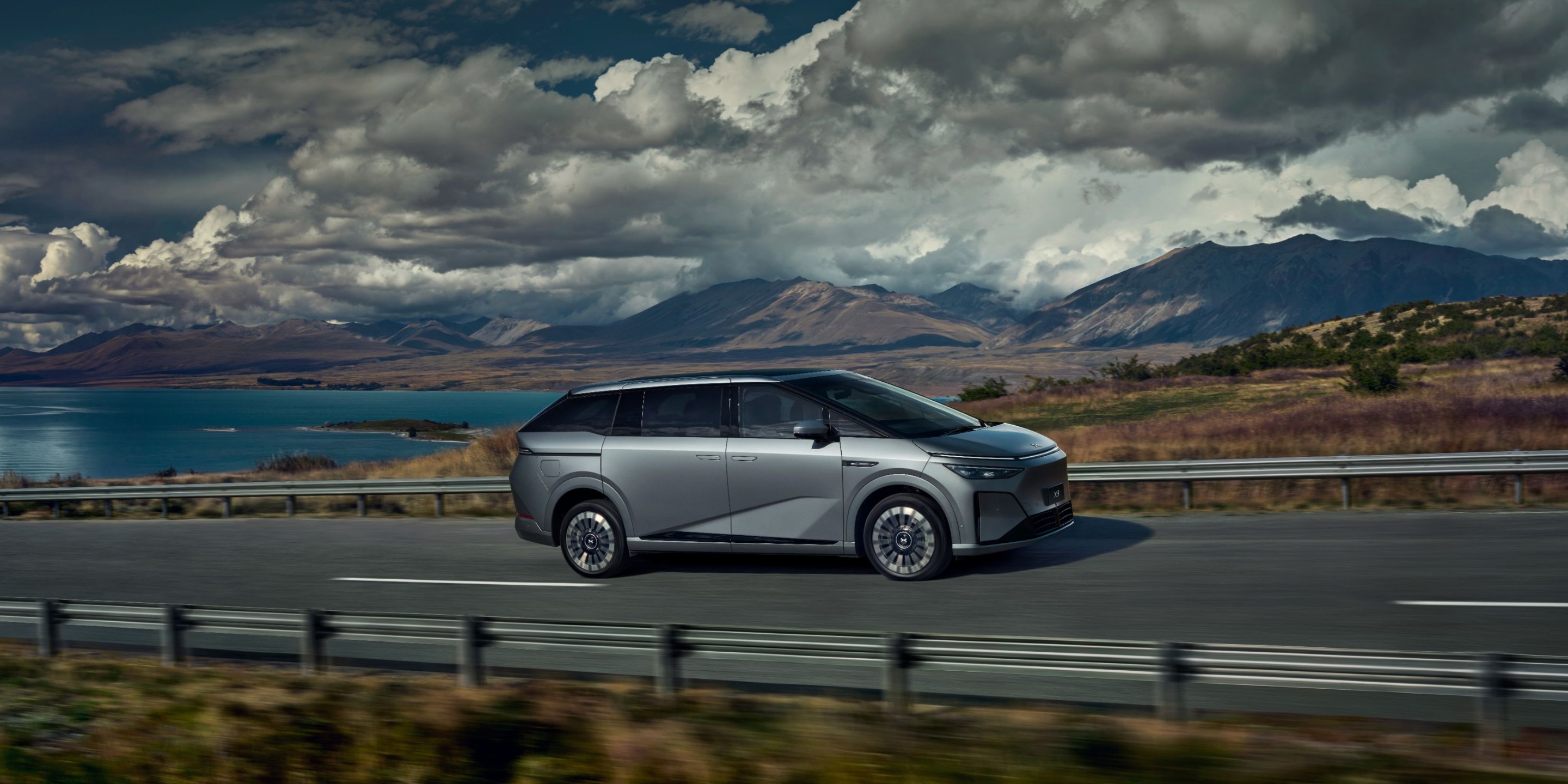
- We can also use this calculator to estimate the charging power for the XPENG X9's AWD Performance:
The Battery Size is 110 kWh, and the charging power is up to 542 kW. In this case, the theoretical charging time for the XPENG X9's AWD Performance is 110 ÷ 542 ≈ 0.20 h (converted to minutes is 12 minutes).
Why doesn't an electric car charge permanently at maximum kW power?
In practice, charging follows a charging curve. Modern battery management systems regulate charging power depending on the state of charge and battery temperature to:
avoid overheating
protect the battery chemically
support long-term battery life
From higher states of charge — often from around 50–70% — charging power is gradually reduced. This behaviour is technically intentional and standard across the industry.
Charging power and running costs (TCO)
Stable charging power across a wider charge range can improve everyday efficiency, especially on long trips. Shorter charging stops reduce downtime, which can make the car more convenient to use and easier to plan around.
Effective thermal and battery management also helps protect the battery, which over the long term can influence maintenance effort and total costs.
Conclusion
When comparing electric cars, it's not about a single maximum figure. kW and kWh only show their value in combination. Those who understand both figures and match them to their own driving and charging profile can realistically assess electric car range, charging times and costs.
FAQ
Q: Can kW be converted directly to horsepower?
A: Yes. 1 kilowatt (kW) corresponds to about 1.36 horsepower. For context: an XPENG New G6 with a system output of 415 kW equates to roughly 564.4 horsepower, and an XPENG X9 with a system output of 542 kW equates to roughly 737,12 horsepower. Actual on-road performance depends on many factors, including vehicle weight, drive configuration and power delivery during driving.
Q: Why is charging speed (kW) lower in winter?
A: EV batteries work most efficiently within a certain temperature window. At low outside temperatures, charging power can therefore be reduced. Modern EVs have thermal battery management systems. These can bring the battery to a suitable operating temperature before fast charging, helping to maintain charging power in cold conditions. The charging speed actually achieved depends on the vehicle, the charging infrastructure and the ambient temperature.
Q: What matters more in an EV: high kW power or high kWh capacity?
A: It depends on your driving profile. High charging power (kW) can be a particular advantage on long trips, because charging stops can be shorter. A larger battery capacity (kWh) can offer more range, but often comes with higher weight and higher cost. For many drivers, a balanced combination of sufficient range and efficient charging power is the key. Everyday use, charging options and personal driving habits are what matter.


