

 Global
 China
China Austria
 Australia
 Bahrain
 Belgium
 Colombia
 Denmark
 Deutschland
 España
 مصر
مصر France
 Greece
 Guatemala
 Hong Kong
 Ireland
 Ísland
 מדינת ישראל
 Luxembourg
 México
 Netherlands
 New Zealand
 Norge
Norge Portugal
 Singapore
 Sverige
 ไทย
ไทย UAE
UAE United Kingdom
 Poland
 Philippines
 Qatar
Qatar Switzerland
 Uruguay
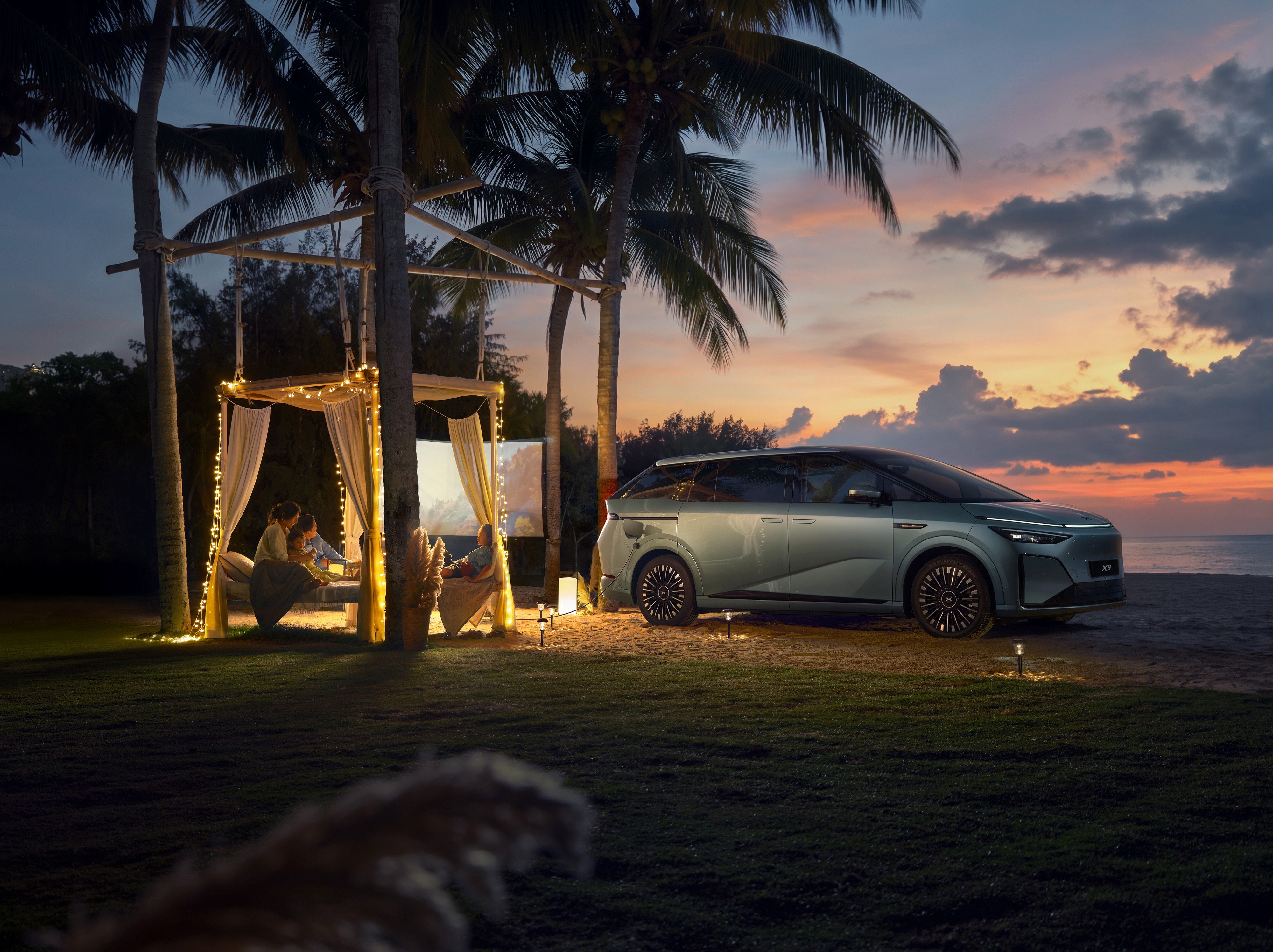
Vehicle-to-load (V2L) turns your electric car into a mobile power station — kettle, fridge, lights and more, straight from the battery. If you're wondering what V2L is, or how to use V2L while camping, here's how to use it safely on your next Australian trip.
Camping in Australia is better with power: a kettle for morning coffee, lights after dark, a fridge that actually stays cold. For EV camping, V2L is the feature that changes everything. The V2L — vehicle-to-load — makes all of it possible by letting your EV supply electricity to your gear. On the XPENG NEW G6, the discharge system has been upgraded to support up to 6kW of output. Here's the complete guide to using it well.
What V2L can power
V2L output isn't unlimited, so it helps to think in three categories:
Low-power devices (safe for long use): LED camping lights, phone chargers, power banks, small fridges, coffee machines. These draw little and can run for hours.
Medium-power devices (use intermittently): electric kettles, portable ovens, small induction cookers. Fine for short bursts — just watch the total.
High-power devices (use with care): grills, commercial-style coffee machines and power tools. The NEW G6 supports up to 6kW of discharge, so a 3kW grill plus a kettle is well within range.
The key rule: don't run multiple high-power devices at the same time. If the total exceeds the car's output limit, the vehicle's overcurrent protection will interrupt the power supply automatically. Plan what you'll run, and you'll avoid the cutoff.
Getting V2L going: the standard steps
1. Park on flat ground, apply the parking brake and shift into P.
2. Find the charging port and insert the official V2L discharge adapter.
3. Open the vehicle control screen, find the external power supply option and turn it on.
4. Check the real-time output on the screen, then connect your camping equipment.
It takes under a minute once you know where everything is — and after the first time, it's second nature. That's car camping power, without a generator.
Managing the battery while you camp
Running your camp from the car uses the same battery that drives it. A little EV camping battery planning protects both your trip and the pack:
Keep the charge above 30 per cent during long outdoor sessions — the same guidance that protects the main battery generally. If you're camping for more than about four hours with a fridge running, check the level. Top up when you can.
Avoid deep discharge. Letting the battery run very low while powering gear is hard on it. It also leaves you without enough charge to drive home.
Charge when you can. If a charger is available nearby, a top-up between camp days keeps everything comfortable.
Safety notes for outdoor use
Use it in open air. Don't run the discharge function in a closed garage or poorly ventilated space.
Keep the port and adapter dry. Rain, mud and sand are the enemies — set up away from splash zones and keep the connection clean.
Don't yank the cable. Pulling the discharge cable hard can damage the port's internal structure.
Close up properly. After the trip, wipe the port dry and refit the protective cap before driving.
After the trip: cabin care
Camping brings mud, gravel and the occasional spill into the cabin. Sand from boots scratches door sills, spills stain carpets, and fishing gear can mark the trim. A quick clean after each trip keeps the interior fresh. Vacuum the floors, wipe surfaces and dry any damp mats to avoid long-term odour and stains. A little routine care means the car is ready for the next adventure.
The bottom line
V2L makes your EV genuinely useful beyond driving: 6kW of output on the NEW G6 is enough for a proper camp setup, from coffee to power tools. Respect the power limits and keep the battery above 30 per cent. Look after the gear, and your next Australian camping trip just got a lot more comfortable.