

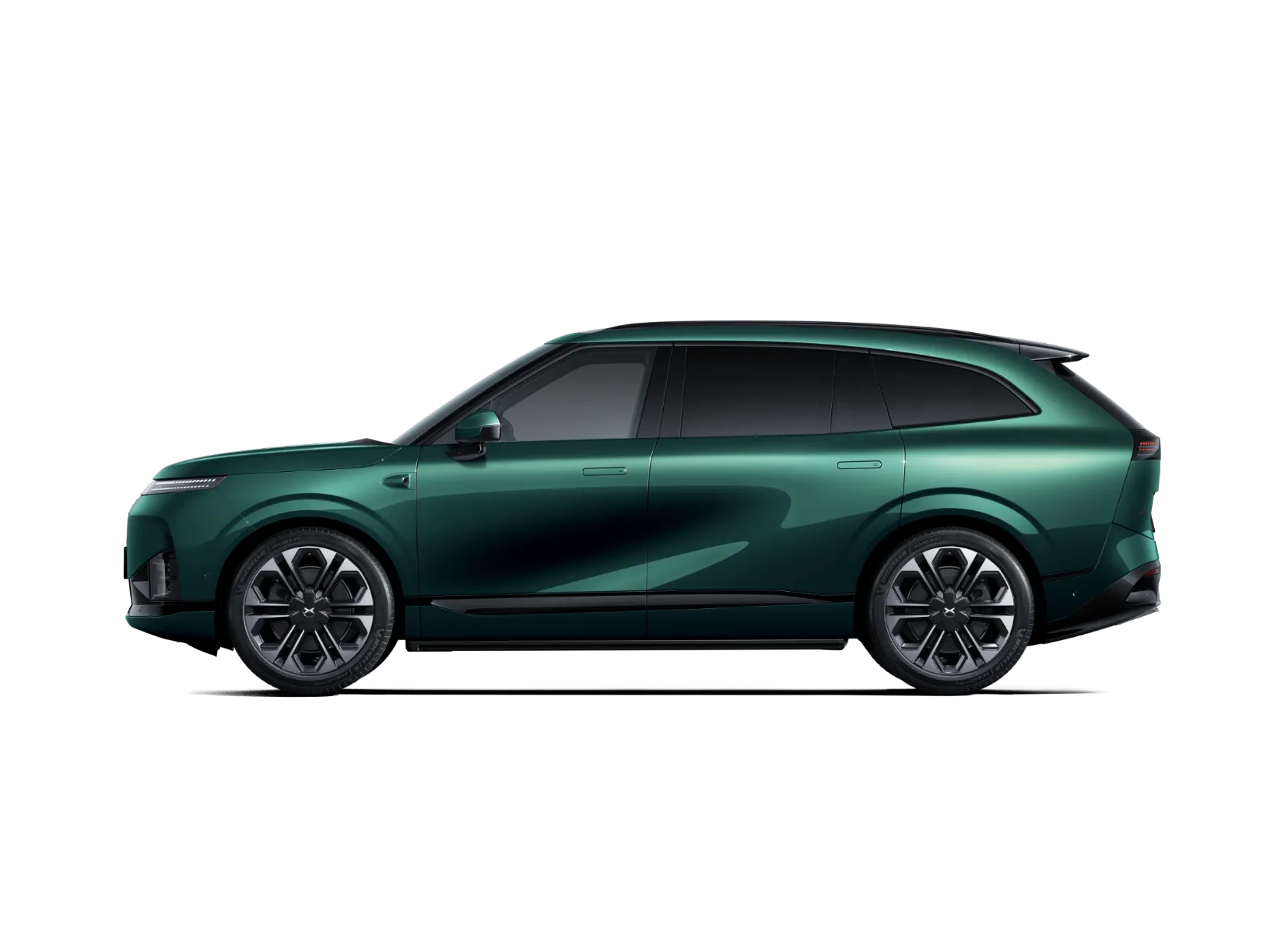


The XPENG L03: Backed by the Industry, Built for an Ecosystem
Some car companies sell you a car. XPENG is building something larger — and increasingly, the rest of the industry is paying attention.
In 2026, XPENG's technology is being adopted by one of the world's largest automakers, its robotics arm has begun producing humanoid robots on a fully automated production line, and its flying-car company is taking pre-orders from customers around the world. The XPENG L03 sits at the centre of this ecosystem — a car that is not just a product of this technology, but an entry point into it.
The industry's biggest vote of confidence
The strongest endorsement a technology company can receive is a competitor choosing to build on your platform. In March 2026, Volkswagen Group's joint venture in China brought the ID. UNYX 08 into series production — its first production model developed jointly with XPENG — after just 24 months of collaboration. The car comes standard with XPENG's VLA (Vision-Language-Action) autonomous-driving model, powered by XPENG's Turing AI compute platform delivering 1,500 TOPS of processing power.
This is not a badge, a logo, or a joint marketing exercise. Volkswagen is integrating XPENG technology into its core product line — the architecture partnership has since been extended to cover Volkswagen's ICE and PHEV models, with five CEA-based models planned for 2026.
Why would a global automotive giant bet on XPENG's technology? Because XPENG has spent a decade building one of the industry's most advanced full-stack AI capabilities — from silicon and models to manufacturing. When the market's most demanding players choose your platform, it says more about your engineering than any marketing campaign could.
Beyond cars: the IRON humanoid robot
The same AI platform that drives XPENG's cars is now walking off the production line in human form.
In September 2026, XPENG's first mass-produced general-purpose humanoid robot — IRON — autonomously walked off XPENG's production line in Guangzhou, built on a line where over 80% of core processes are automated. IRON has 76 degrees of freedom across its body, 22 in each hand, and is powered by three Turing AI chips delivering 2,250 TOPS of compute — running a physical AI model deployed entirely on-device.
IRON is not a concept. It is a production program: volume production is scheduled for the end of 2026, with deliveries to China and international markets beginning in 2027. In August 2026, XPENG Robotics closed its first external funding round of over US$900 million at a valuation exceeding US$6.3 billion — among the largest private rounds in the embodied-AI sector.
The sky is part of the roadmap too
XPENG's ecosystem extends beyond the road. ARIDGE, XPENG's flying-car company, is developing the Land Aircraft Carrier — the world's first modular flying car — with volume production and deliveries scheduled for 2026 and global orders already exceeding 7,000 units.
Alongside it, the A868 all-tilting-rotor hybrid flying car targets a range of over 500 km, a cruise speed of over 360 km/h, and seating for six passengers. In September 2026, ARIDGE partnered with Ras Al Khaimah in the UAE to establish the world's first personal flying-car regulatory sandbox — a signal that this is no longer science fiction, but a regulated, investable industry.
Three growth curves, one AI platform
XPENG's strategy is built on three growth curves: smart EVs, humanoid robotics, and global expansion — all powered by the same full-stack AI technology stack.
The L03 is where these curves meet. It is built on the same architecture that Volkswagen has chosen for its next-generation models, it shares its AI brain with the robots coming off XPENG's production line, and it carries the same full-stack engineering that is taking flight with ARIDGE.
This is what "ecosystem" means at XPENG: not a collection of products, but one AI platform manifesting across cars, robots, and flight.
The L03: your entry point
Every technology company promises an ecosystem. XPENG is delivering one — and you can be part of it today.
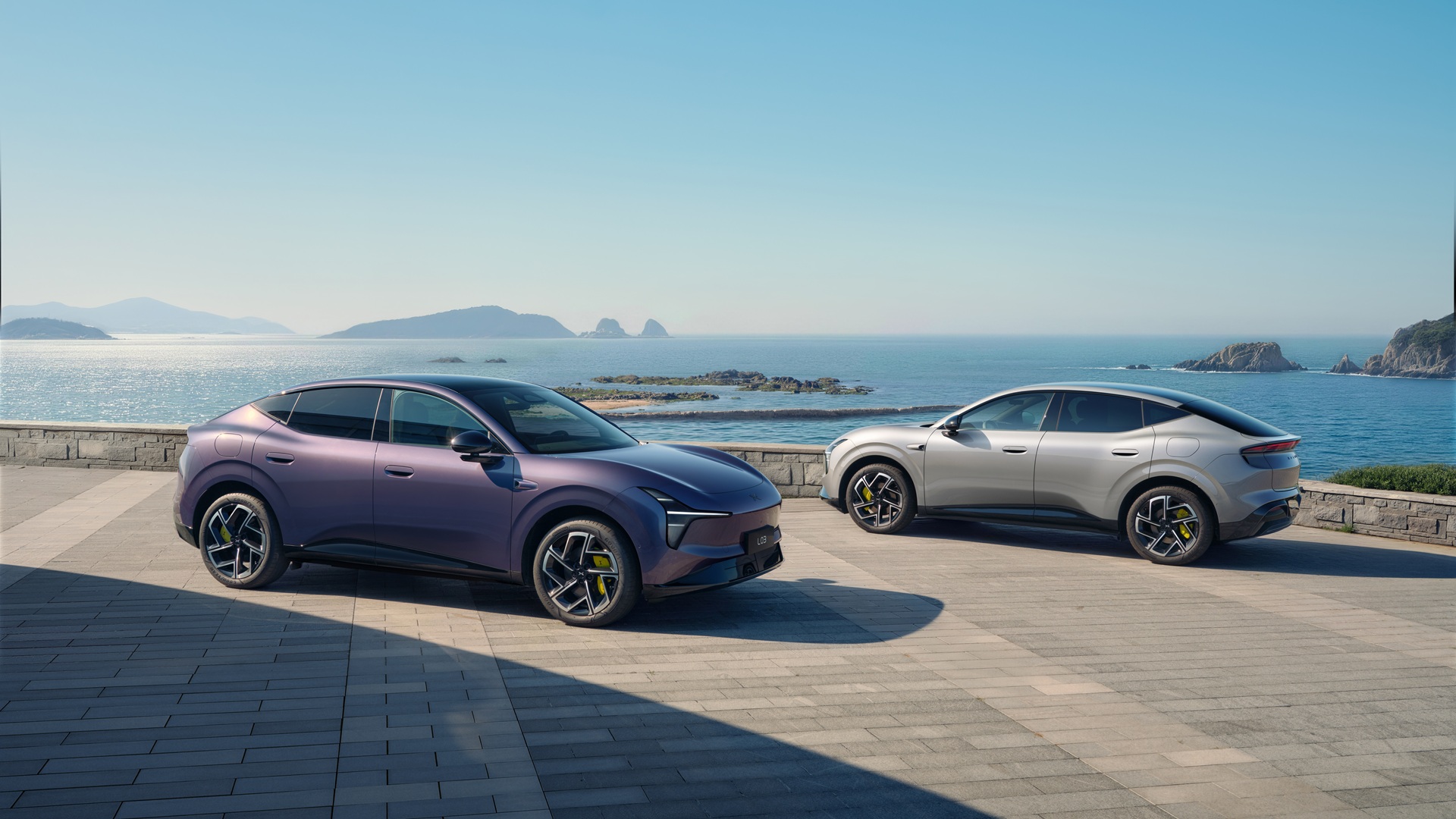
The XPENG L03 is the most accessible expression of this vision: a smart electric SUV that brings XPENG's full-stack AI technology to Australian roads, backed by the confidence of the world's largest automakers and the momentum of a company building across cars, robots, and flight.
Explore the XPENG L03 and see what an AI-native car company can build when it thinks beyond the car itself.
Disclaimer
Unless otherwise stated, all data displayed on this page are sourced from XPENG laboratory testing and are provided for reference only. Actual performance may vary depending on the specific vehicle configuration, vehicle condition, and other factors. Actual results may vary under real-world conditions.
Volkswagen partnership details (ID. UNYX 08 joint development, EEA architecture, Turing AI compute, CEA architecture models) reflect publicly announced programmes as of the time of publication. Programme timing, model counts and regional availability are subject to change by the respective companies.
IRON humanoid robot specifications (76 degrees of freedom, 21 per hand, 2,250 TOPS compute, over 80% automated core processes) and production and delivery targets (volume production from end of 2026, deliveries from 2027) are XPENG's publicly stated plans and remain subject to change. The robotics funding round (over US$900 million raised at a valuation exceeding US$6.3 billion) reflects the announced round as reported by XPENG at the time of writing.
ARIDGE flying-car details (Land Aircraft Carrier, A868 range/speed/seat targets, 7,000+ global orders, Ras Al Khaimah regulatory sandbox) reflect ARIDGE's public announcements and remain subject to change. Flying-car availability in Australia is not confirmed.
The XPENG L03's availability, specifications, range figures, drive-away pricing and standard equipment for the Australian market are subject to confirmation by XPENG. Please refer to https://www.xpeng.com/au/model/L03 for the latest official product information.
Any forward-looking statements — including humanoid robot production volumes, flying-car volumes, and Volkswagen model plans — are based on publicly stated company programmes and are not guarantees of future results.
This article is editorial commentary produced by XPENG for brand communication purposes, illustrating how the L03 reflects the company's R&D capabilities, technology stack and broader ecosystem. It is not financial advice, not a recommendation to purchase, and not a substitute for official XPENG product disclosure materials.
Images are illustrative; final vehicle appearance, colour availability and interior configurations for each market will be defined in the official local specification release.


