


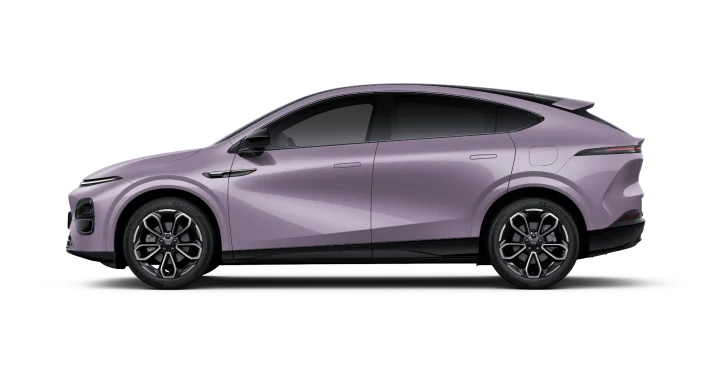


XPENG UNVEILS WORLDGPT, A SINGLE AI MODEL THAT LEARNS ACROSS CARS, ROBOTS AND DRONES
- WorldGPT brings together AI learning across six types of machines, including cars, boats, drones, robotic arms and humanoid robots.
- The model can predict future scenarios, plan actions and support the development of AI systems across different machines.
- WorldGPT achieved 12 first-place results across public benchmarks in autonomous driving, robotics, visual understanding and video generation.
GUANGZHOU, China, November 24, 2026 — Recently, XPENG unveiled WorldGPT, a new AI model designed to help different types of machines understand, predict and interact with the physical world, marking another step in the company's development of Physical AI technologies.
Developed as part of the XPENG Turing World Model family, WorldGPT brings together learning across six different types of machines: cars, boats, drones, single-arm robots, dual-arm robots and humanoid robots. Unlike conventional AI systems developed separately for different machines, WorldGPT enables them to benefit from a shared understanding of how the physical world works. It is the first world model to demonstrate prediction and action-planning capabilities across all six types of machines.
One AI Model, Different Embodiments
Today, autonomous vehicles, robots and drones typically rely on AI systems developed for their specific tasks. Yet many of the challenges they face are similar.For example, a car needs to judge distances and anticipate the movements of surrounding vehicles, while a robotic arm must identify an object's position and adjust its movements to pick it up. Both depend on understanding their surroundings, predicting what happens next and responding accordingly.
WorldGPT brings these capabilities together through a shared AI model. By learning from visual data across different types of machines, it combines perception, reasoning, prediction and action planning.
Given previous camera footage and a simple instruction, WorldGPT can generate video showing how a scene might evolve, plan the actions needed to complete a task and explain its reasoning in natural language.
This allows the model to learn common principles of the physical world across different applications, rather than requiring each machine to develop that understanding independently.
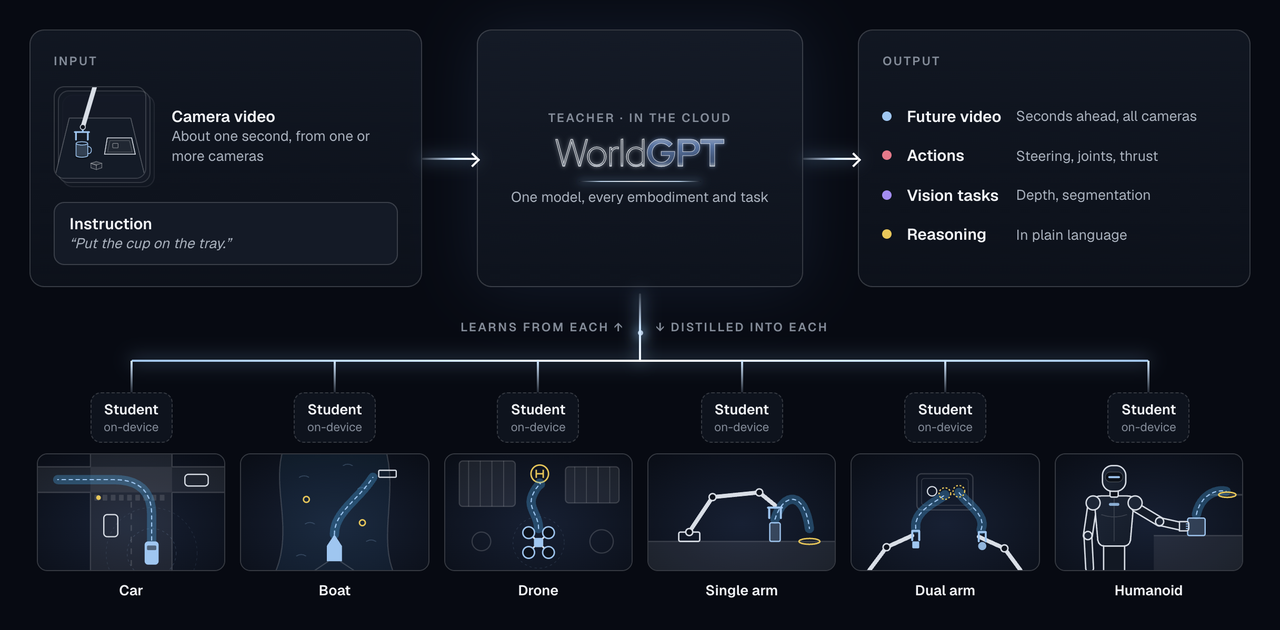
WorldGPT learns from six types of machines through a shared cloud-based teacher model, with knowledge transferred to specialised on-device models.
Making Physical AI Development More Efficient
Beyond its ability to learn across different machines, WorldGPT could also change how physical AI systems are developed.Traditionally, bringing AI to a new type of machine requires collecting specialised data, training a dedicated model and adapting it to the machine's hardware and movements.
WorldGPT takes a different approach. Acting as a large cloud-based "teacher model", it learns shared knowledge from data across different machines. This knowledge can then be distilled into smaller, specialised AI models designed to run directly on individual machines.
Instead of developing an AI system from scratch for each new machine, developers can build a shared foundation and focus on adapting it to specific tasks and hardware.
This approach could reduce development costs, improve data efficiency and make it easier to extend physical AI capabilities to new types of machines.
WorldGPT demonstrates its ability to process visual inputs and instructions to generate future video, actions, visual tasks and natural-language reasoning across different machines.
Leading Results Across Driving, Robotics and Visual Understanding
WorldGPT has demonstrated strong performance across autonomous driving, robotic manipulation, visual understanding and video generation, achieving 12 first-place rankings across public benchmarks in these four areas as of November 12, 2026.In autonomous driving, WorldGPT ranked first across four benchmark evaluations, including NAVSIM v2, where it led in both standard and challenging driving scenarios.
In robotics, the model achieved an average success rate of 95.2% across 50 single-arm manipulation tasks, the highest among published models evaluated. It also ranked first in tests assessing its ability to adapt to unfamiliar tasks and changing environments.
In visual understanding, WorldGPT ranked first on CV-Bench and two BLINK subtasks, which assess spatial understanding and object relationships. In video generation, it achieved the highest overall score on VBench 2.0 and tied for first on WorldOlympiad, which evaluates long-horizon simulation.
Together, these results highlight WorldGPT's ability to combine multiple physical AI capabilities within a shared foundation model.
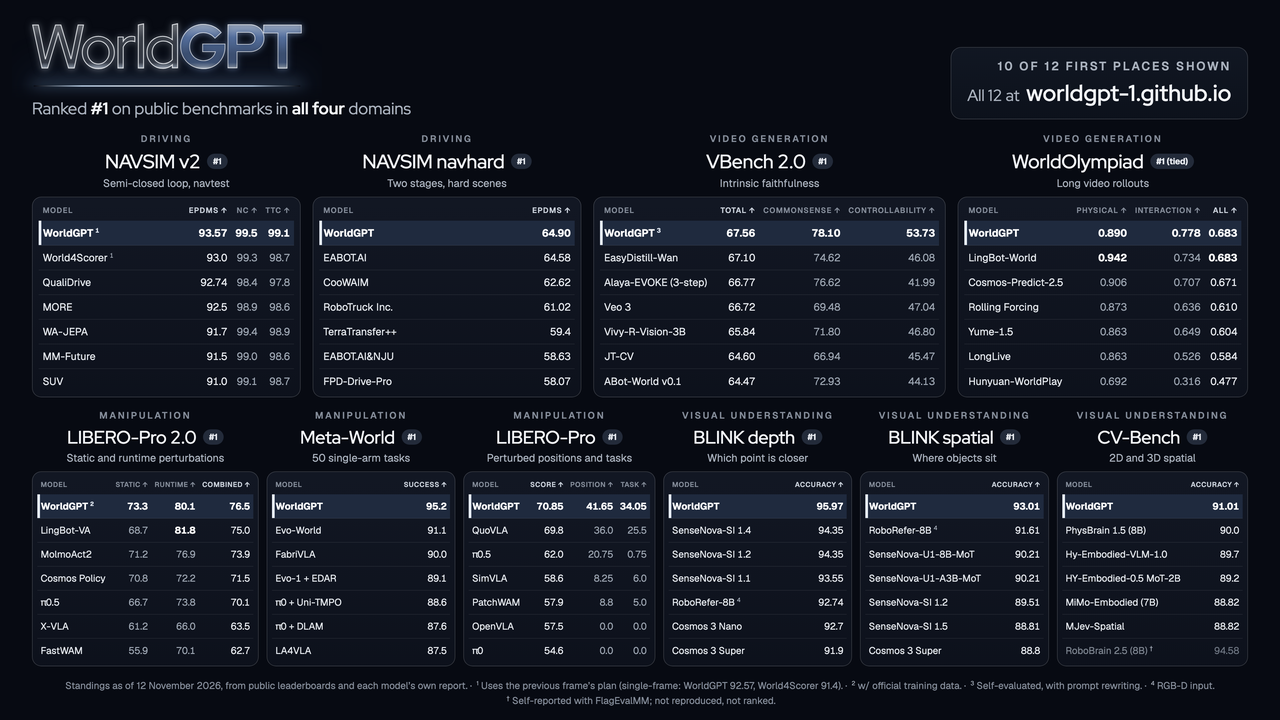
Selected public benchmark results where WorldGPT ranked first across autonomous driving, robotics, visual understanding and video generation, as of November 12, 2026. Full results are available on the project website.
Towards a Shared Foundation for Physical AI
WorldGPT is part of XPENG's broader Physical AI strategy, spanning intelligent vehicles, humanoid robotics and autonomous mobility. Beyond enabling knowledge sharing across different machines, its ability to simulate how the physical world responds to different actions could open up new possibilities for AI training and continuous improvement.The long-term goal is to build a shared foundation of physical intelligence that can be adapted across different types of machines, making future Physical AI applications more efficient to develop.
For technical details, research results and demonstration videos, visit:
https://worldgpt-1.github.io/
About XPENG
XPENG is a leading global Physical AI company, dedicated to bringing artificial intelligence into the physical world to reshape future mobility and smart living. Through in-house R&D, XPENG has developed a full-stack Physical AI architecture spanning Turing AI chips, world foundation models, and highly integrated software and hardware applications. This unified technology foundation of XPENG powers an expansive product portfolio of smart EVs, robotaxis, and humanoid robots, advancing the deployment of Physical AI at scale. Headquartered in Guangzhou, China, XPENG is dual-primary listed on the New York Stock Exchange and the Hong Kong Stock Exchange. With global capabilities across R&D, manufacturing, sales, and services, XPENG drives continuous technological innovation and fosters an open Physical AI ecosystem, making life smarter, safer, and better for users worldwide.
For more information, please visit https://www.xpeng.com/.
For media inquiries:
XPENG PR Department
Email: pr@xiaopeng.com


